The currency in Vietnam is called the Vietnamese dong (VND). In this guide, I’ll go over the different VND denominations, using ATMs in Vietnam, currency exchangers and rates, and the costs of some items you’ll likely purchase when visiting Vietnam.
I’ll also go over some personal tips for handling money in Vietnam and some common scams to watch out for.
Vietnamese Currency Basics
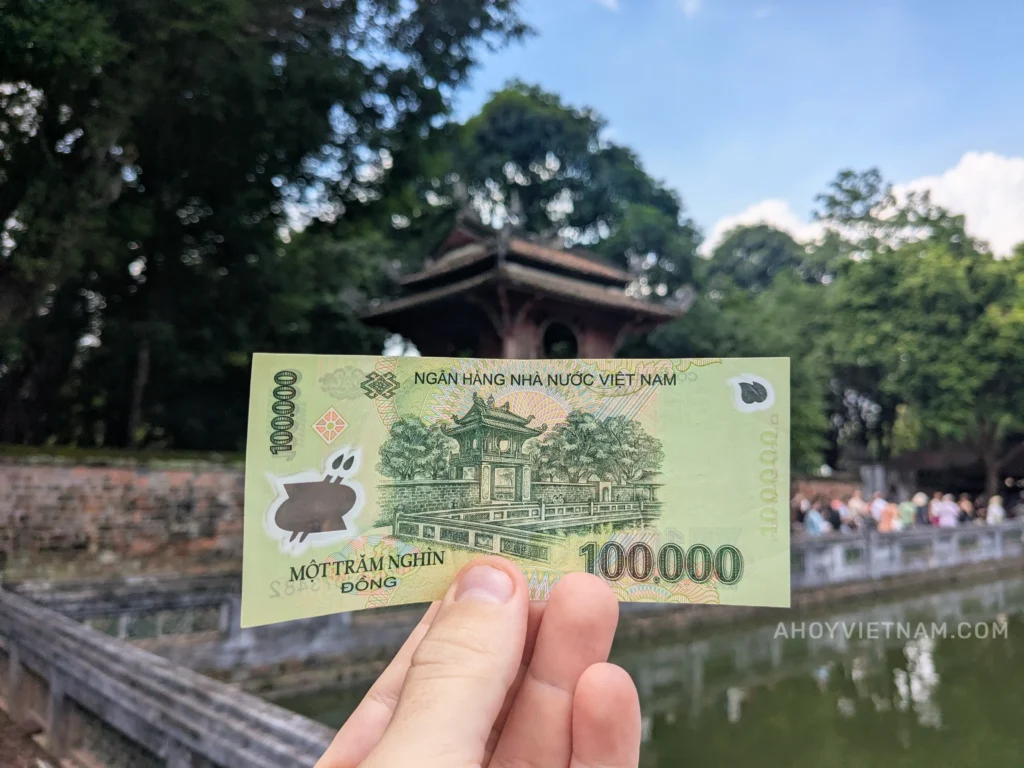
The Vietnamese dong — seen as ₫ or k or VND — comes exclusively in banknotes nowadays. They used to have coins in circulation, but these have been discontinued and are no longer used. There are several denominations of banknotes.
The current common banknotes in VND are: 1,000, 2,000, 5,000, 10,000, 20,000, 50,000, 100,000, 200,000, and 500,000.
There are also the 100, 200, and 500 VND notes. These are technically current but are very rarely used. I’ve received a 500 VND note a handful of times from cashiers over the years.
The 1,000 VND, 2,000 VND, and 5,000 VND bills are printed on paper. And the 10,000 VND to 500,000 VND bills are printed on polymer.
You will likely be handling all of these bills during a trip to Vietnam. It’s not like in the USA, for example, where you rarely use a 100 USD bill. The 500,000 VND bill is the biggest in Vietnam and is commonly used.
All of the currency in Vietnam has a picture of Ho Chi Minh on the front. The backsides of the bills have different Vietnamese sites or scenery, like the Japanese Bridge in Hoi An (20,000 VND), the Temple of Literature in Hanoi (100,000 VND), Ha Long Bay (200,000 VND), and Ho Chi Minh’s birthplace in Kim Liên (500,000 VND).
Using ATMs in Vietnam
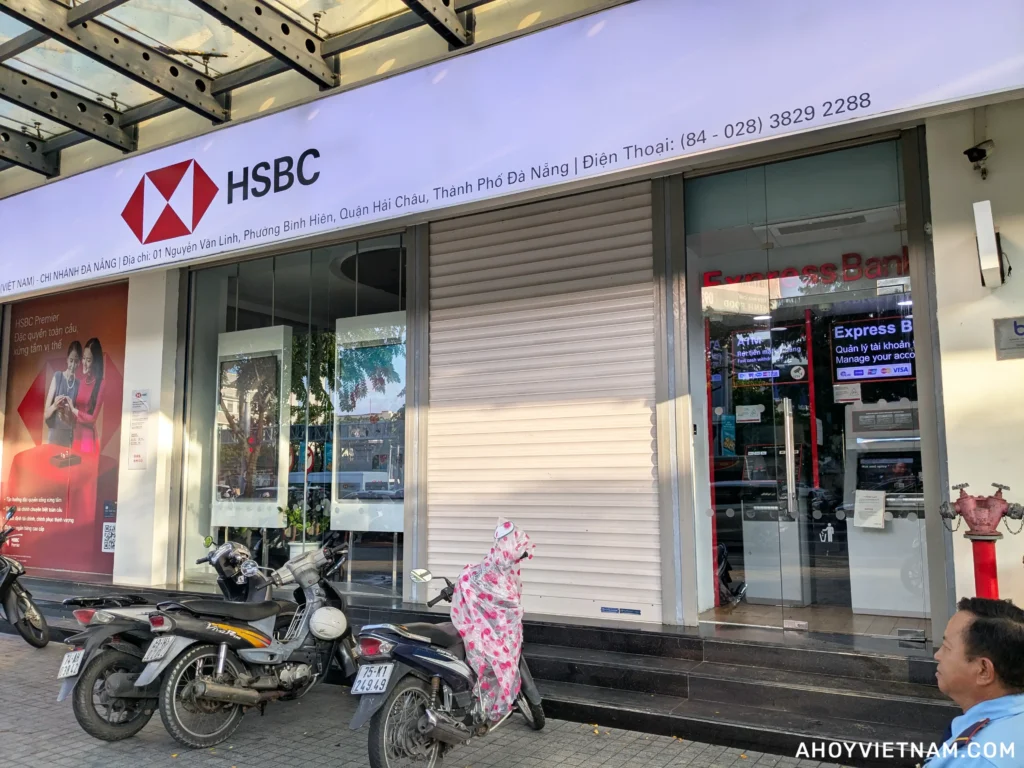
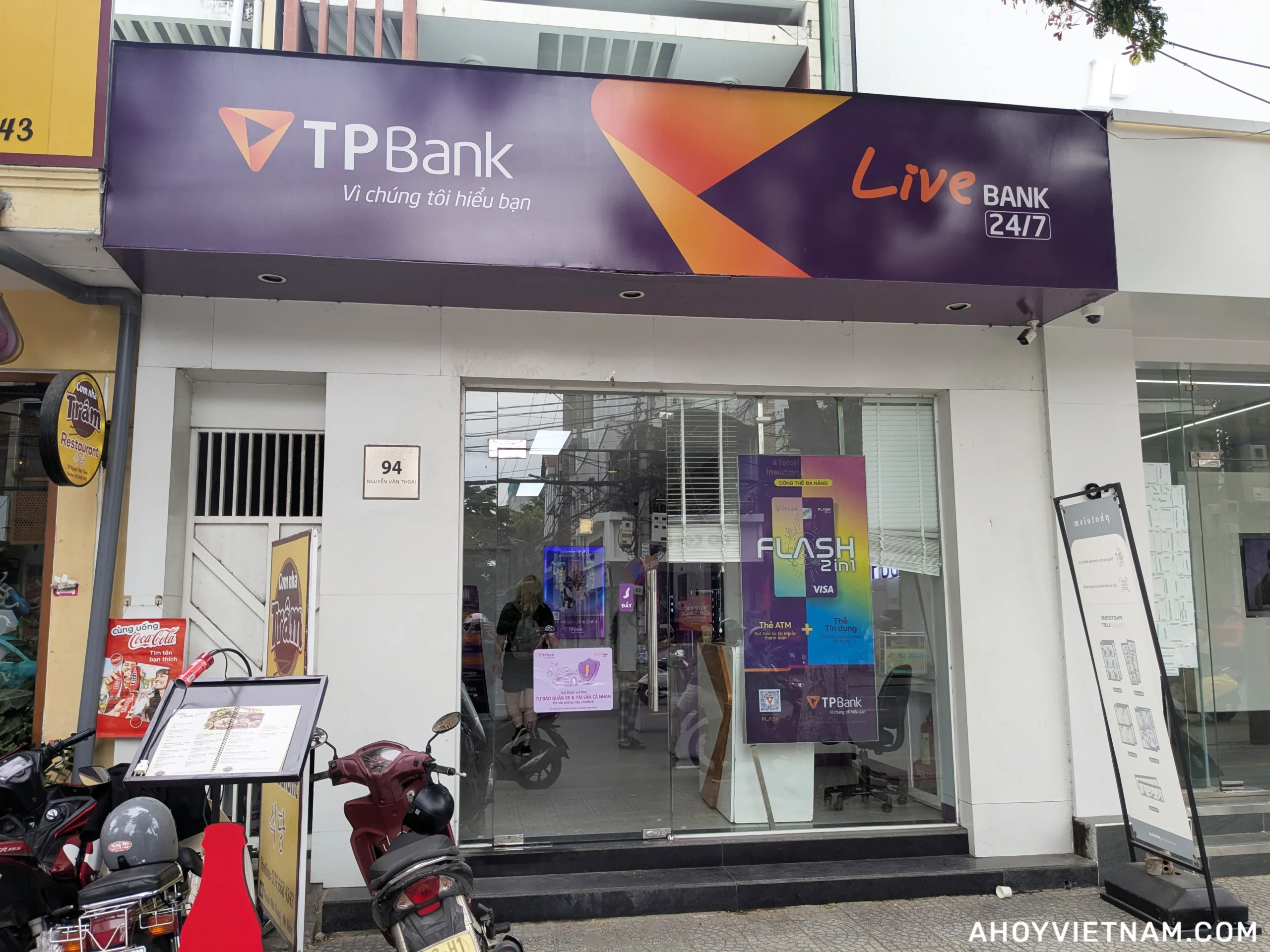
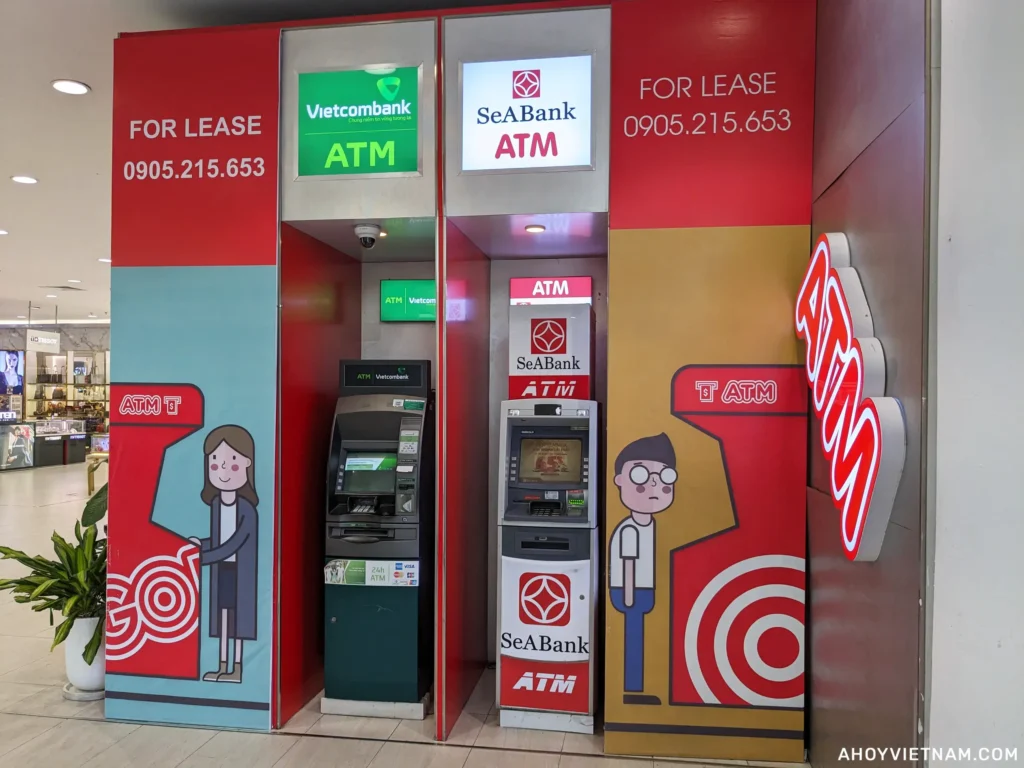
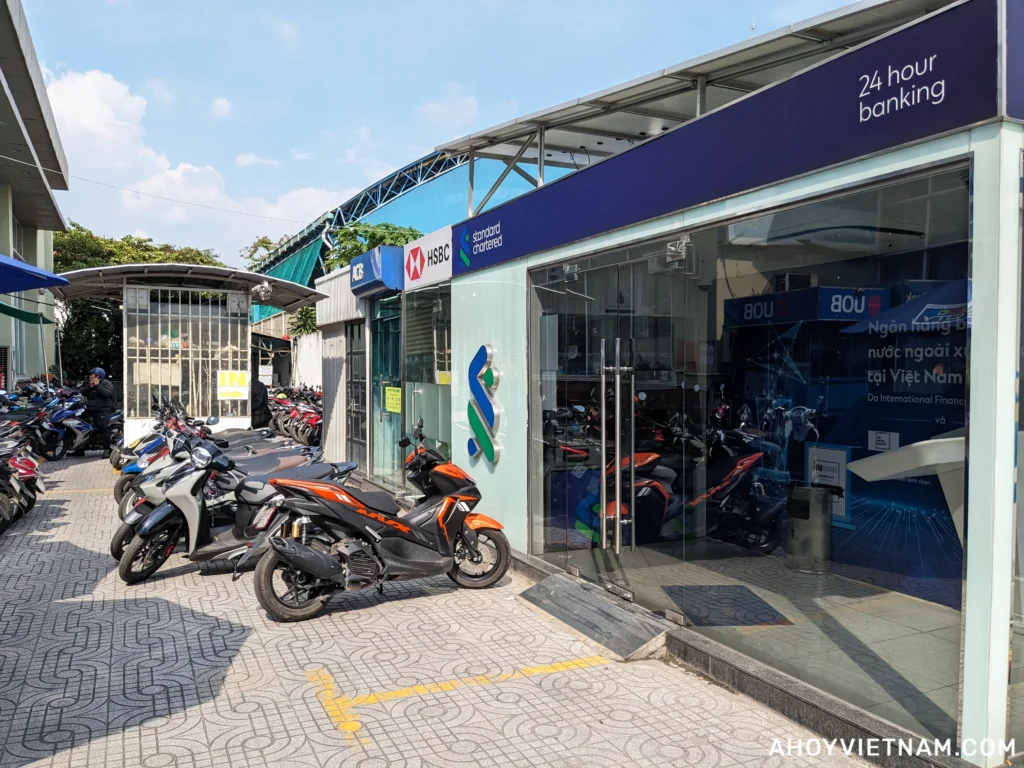
ATMs are readily available in all major cities in Vietnam. Bank branches have branded ATMs, and sometimes you’ll find clusters of several different ATMs together, like inside shopping malls, supermarkets, or other touristy areas.
Using Google Maps is really helpful when trying to find a nearby bank branch or ATM. You can simply type in “ATM” or “bank” and start looking. Some banks/ATMs that I frequently use for taking out money in Vietnam:
- TPBank
- VPBank
- Agribank
- Vietcombank
- Techcombank
- HSBC
- BIDV
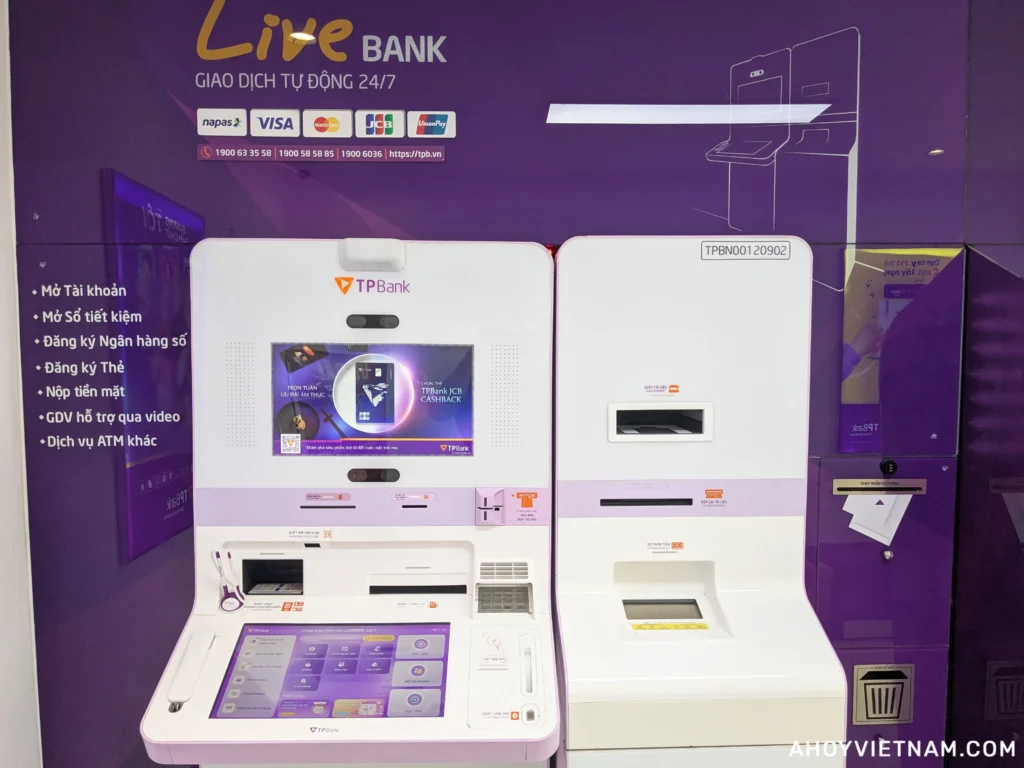
ATMs in Vietnam have different maximum withdrawal limits and fees. Some ATMs have a maximum withdrawal of 2 to 3 million VND per transaction, while others allow 5 million VND, and some allow 10 to 20 million VND.
💡 You really don’t need to take out 10 million VND (about $380 USD) to have as walk-around cash. That’s a lot of cash to be carrying for everyday expenses. Also, in nearly all of the popular cities in Vietnam, credit cards are widely accepted. This goes for restaurants, malls, supermarkets, and convenience stores. Below, I cover the costs of common items in Vietnam.
Vietnam ATM fees are separate from whatever your bank will charge you. The most common fee in Vietnam ATMs is about 50,000 to 55,000 VND.
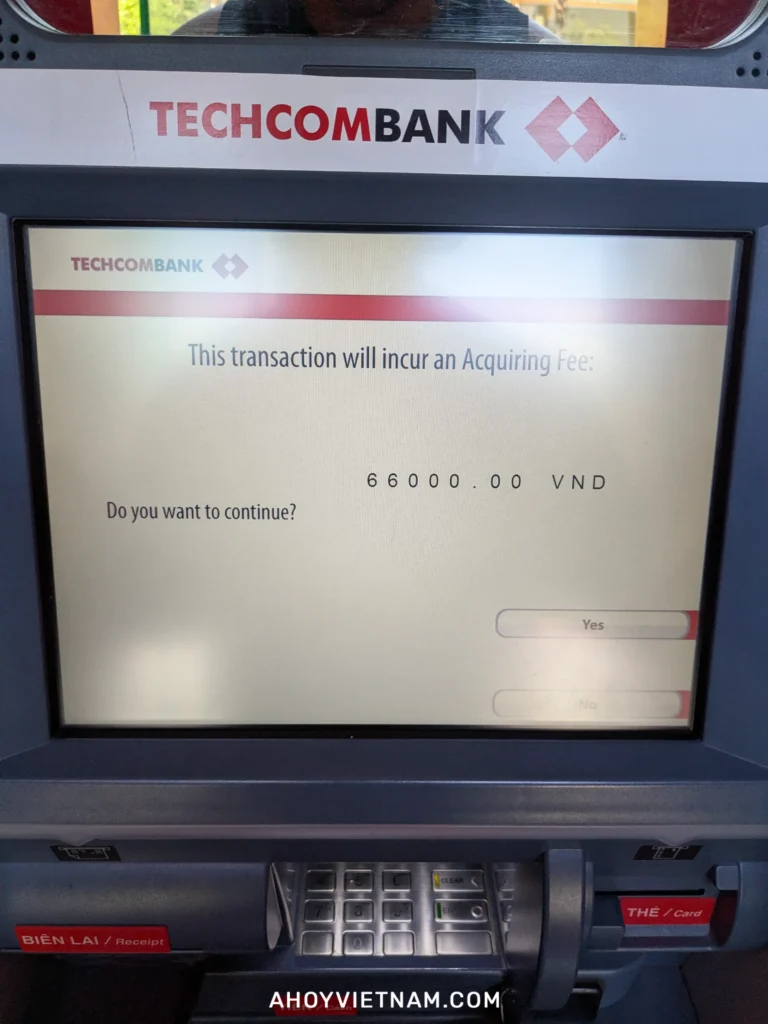
💳 Many travelers use debit cards that reimburse ATM fees worldwide, don’t charge ATM fees themselves, and have zero foreign transaction fees. A common one for Americans is the Schwab debit card. See if your country offers a similar solution.
Sometimes an ATM will only dispense 500,000 VND notes, and others will give you a mixture of bills. If you only get 500K notes, you might have to break them somewhere, depending on what you plan on doing.
Visa and Mastercard are accepted at every ATM I’ve ever seen in Vietnam. Some also accept Cirrus, Maestro, JCB, and UnionPay.
🚨 Anthony’s tip: Get in the habit of unlocking and locking your debit card when using ATMs. All banks have this option inside the mobile app. When a card is locked, it prevents unauthorized transactions and withdrawals. I keep my debit card locked at all times, then unlock it when I’m standing at the ATM, withdraw my cash, then lock it again. This will save you a lot of stress in the event your card gets skimmed or lost.
Cash or Card in Vietnam
The best advice I can give is to carry a combination of a little bit of cash and your preferred Visa or Mastercard. The major cities of Vietnam are slowly becoming very digital. Locals often pay for everything from food in the markets to gas for their scooters with QR codes from their bank’s mobile app.
All of the shopping malls, high-end stores, supermarkets, convenience stores, and nearly all mid-range-and-up restaurants accept cards. However, there have been times when I’ve encountered a business that had a card reader, but it was broken or not working at the time.
You could probably spend an entire trip in one of the major cities without ever needing cash. It all depends on what you’re doing. Sometimes cash is just easier. So I recommend carrying a small amount of cash and a credit card or two. For everyday purposes, 2 or 3 million VND is a lot for one person and can last a few days. ATMs are everywhere in the big cities, so you can always take out more cash.
Wise is a popular platform for managing multiple currencies and also has a debit card. There are no foreign transaction fees, but it does charge ATM withdrawal fees. There are no annual or monthly fees with Wise. This is something to look into as another option for accessing money in Vietnam.
Exchanging Money in Vietnam
In general, it’s best to avoid exchanging money inside airports. These are considered the worst places in terms of exchange rates. Airports have ATMs, so if you just want Vietnamese dong, you can withdraw cash upon landing and be on your way.
To lock/unlock your cards (one of my biggest tips), you’ll need Wi-Fi or a phone plan. This article covers getting eSIMs or SIM cards in Vietnam.
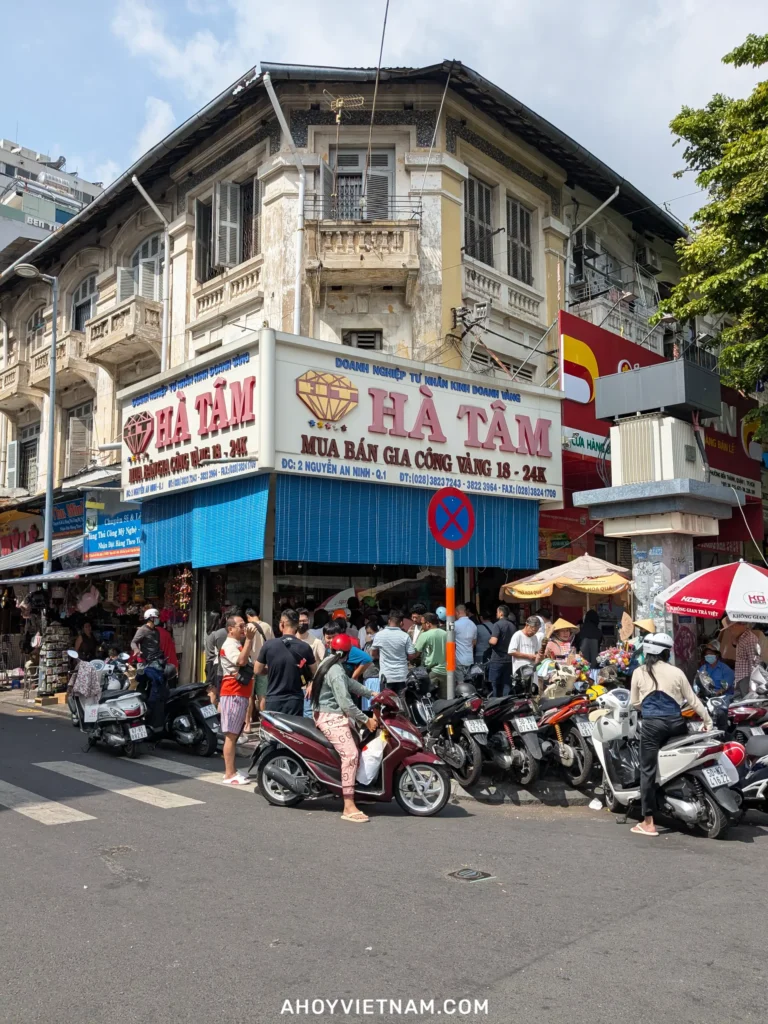
But if you’re coming into Vietnam with foreign currency, avoid the airports if possible and look for gold or jewelry shops in the city. These generally have the better exchange rates.
Vietnamese Dong Exchange Rates
Here’s a table I put together of the Vietnamese dong exchange rate with some common currencies. These rates are current as of the publishing of this article, September 2025. You can see the current Vietnamese currency exchange rates here.
| Foreign Currency | Vietnamese Dong |
|---|---|
| 🇺🇸 1 USD | 26,270 VND |
| 🇦🇺 1 AUD | 17,141 VND |
| 🇪🇺 1 EUR | 30,640 VND |
| 🇸🇬 1 SGD | 20,455 VND |
| 🇬🇧 1 GBP | 35,283 VND |
| 🇨🇳 10 CNY | 36,822 VND |
| 🇹🇼 100 TWD | 85,770 VND |
| 🇵🇭 100 PHP | 45,800 VND |
| 🇯🇵 100 JPY | 17,718 VND |
| 🇰🇷 1000 KRW | 18,900 VND |
How Much Money Do You Need in Vietnam?
The table below shows the costs of some common items in Vietnam. The list isn’t exhaustive and is meant to give you an idea of how much cash to carry daily in Vietnam. All of these numbers are my own estimates.
| Common Purchases in Vietnam | Cost in Vietnamese Dong |
|---|---|
| Vietnamese iced coffee | 20,000 to 40,000 VND |
| Can of local beer | 20,000 to 30,000 VND |
| Bottled water (510ml) | 10,000 VND |
| Bottled water (1.5L) | 15,000 VND |
| Water jug (5L) | 30,000 VND |
| Bowl of phở | 25,000 to 60,000 VND |
| Plate of chicken/pork and rice | 40,000 to 75,000 VND |
| Banh mi (from street vendor) | 25,000 to 40,000 VND |
| Banh mi (from restaurant) | 50,000 to 100,000 VND |
| Western meal (for one) | 150,000 to 250,000 VND |
| Upscale dinner (for one) | 500,000 to 1 million+ VND |
| *SIM card with data (monthly) | 150,000 to 250,000 VND |
| *Grab taxi ride (CAR)(5 km) | 80,000 VND |
| *Grab moto-taxi ride (BIKE)(5 km) | 40,000 VND |
I’ve spoken to a lot of travelers coming to Vietnam for the first time, and many of them overestimate their daily cash needs. I’ve also met travelers in Vietnam who recently arrived, and they’re walking around with giant wads of cash — tens of millions of dong. Walking around with this kind of money, without a purpose or use for it, carries unnecessary risk.
For everyday purchases, 2 to 4 million VND in cash can last one or two people a long time. If you’re planning on shopping at a mall or buying souvenirs, you can always use a credit card or take out more cash. Shopping malls and major cities have plentiful ATMs.
🙋🏻♂️ Important note on costs: Some stores have prices that don’t always work out to even thousands. Example: you buy a few things at a supermarket or convenience store, and your total due is 62,400 VND.
If you’re paying in cash, some places will round to the nearest 1,000, and a few will round to the nearest 500 (and you may end up with the nearly useless 500 VND bill, which is about $0.02 USD). This isn’t necessarily shown on your receipt; it’s done in the moment by cashiers.
Here’s an example of this happening to me at a WinMart in Hue, Vietnam. My total due was 147,900 VND. I paid with a 200,000 VND bill and was given 52,000 VND as change. I lost 100 VND.
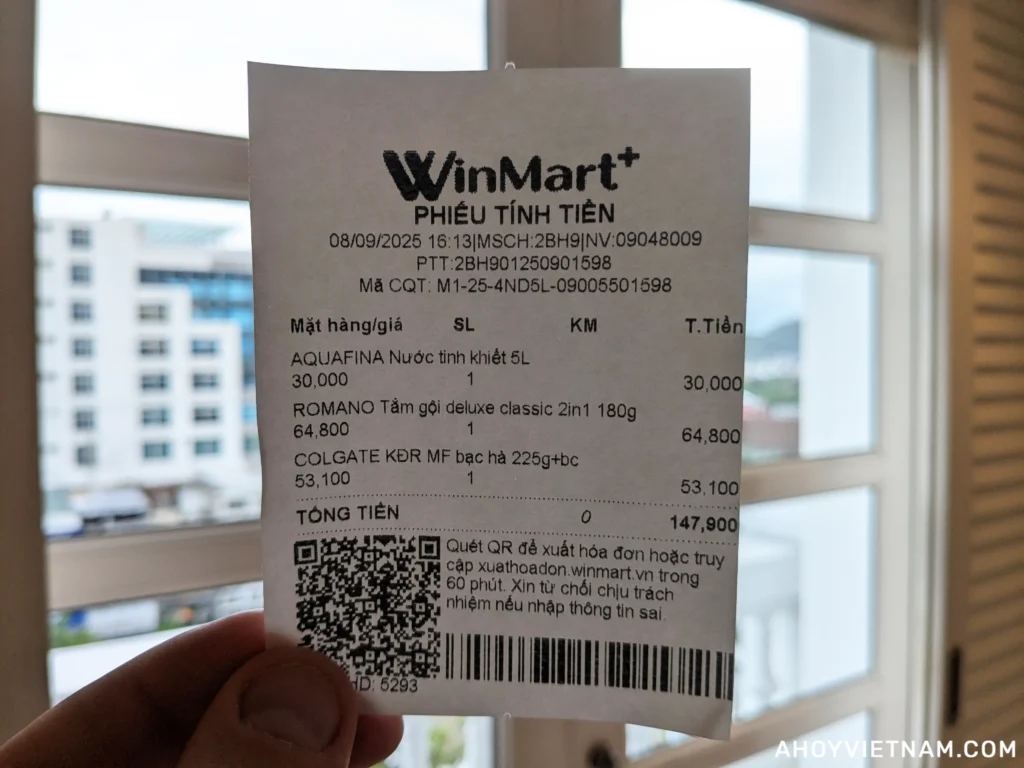
So there may be times when you’ve “gotten away” with an extra couple of hundred dong, and other times when you feel cheated out of a couple of hundred dong. It goes both ways.
Thankfully, this doesn’t happen all of the time because many vendors, coffee shops, and restaurants have simple pricing in even thousands.
Tips for Handling Money in Vietnam
This final section is a list of some personal tips for handling money and carrying cash in Vietnam. There are also a couple of scams to watch out for. This article details more safety tips and scams.
🥷 Pickpockets: This happens, but it’s pretty rare. You can minimize risk by wearing a money belt, fanny pack, or crossbody bag. You can also carry a small amount of cash daily to reduce potential loss.
💸 In busier areas, avoid flashing large amounts of cash or counting it publicly. If you have a fanny pack or zippered bag, you can count your bills inside the bag before pulling out what you need.
🚨 Always count your change: It has happened that cashiers may pretend to miscount or may make unnecessary commotion to distract you while giving you incorrect change back.
👀 Similar-looking notes: the 20,000 VND bill and the 500,000 VND can look similar to first-time visitors to Vietnam. The 20,000 VND bill is light blue. The 500,000 VND bill is cyan.
🚕 Taxi scams: A common taxi scam is a driver pretending not to have change. If you’re trip is 120,000 VND, and you only have a 200,000 VND bill, they may pretend not to have the 80,000 VND. You can avoid this by carrying a mixture of mid-range bills or by using the Grab app to book your taxis (and adding your credit card to go cashless). You can download the app here.
🏧 Locking your cards: I mentioned this inside the article, but develop the habit of locking and unlocking your cards. All banking apps can do this, and it prevents unauthorized transactions and withdrawals. I do this with my debit cards and credit cards. It takes 30 seconds to unlock, use it for a payment or cash withdrawal, then lock it again.
If you have any questions, feel free to ask me in my Vietnam travel planning groups.