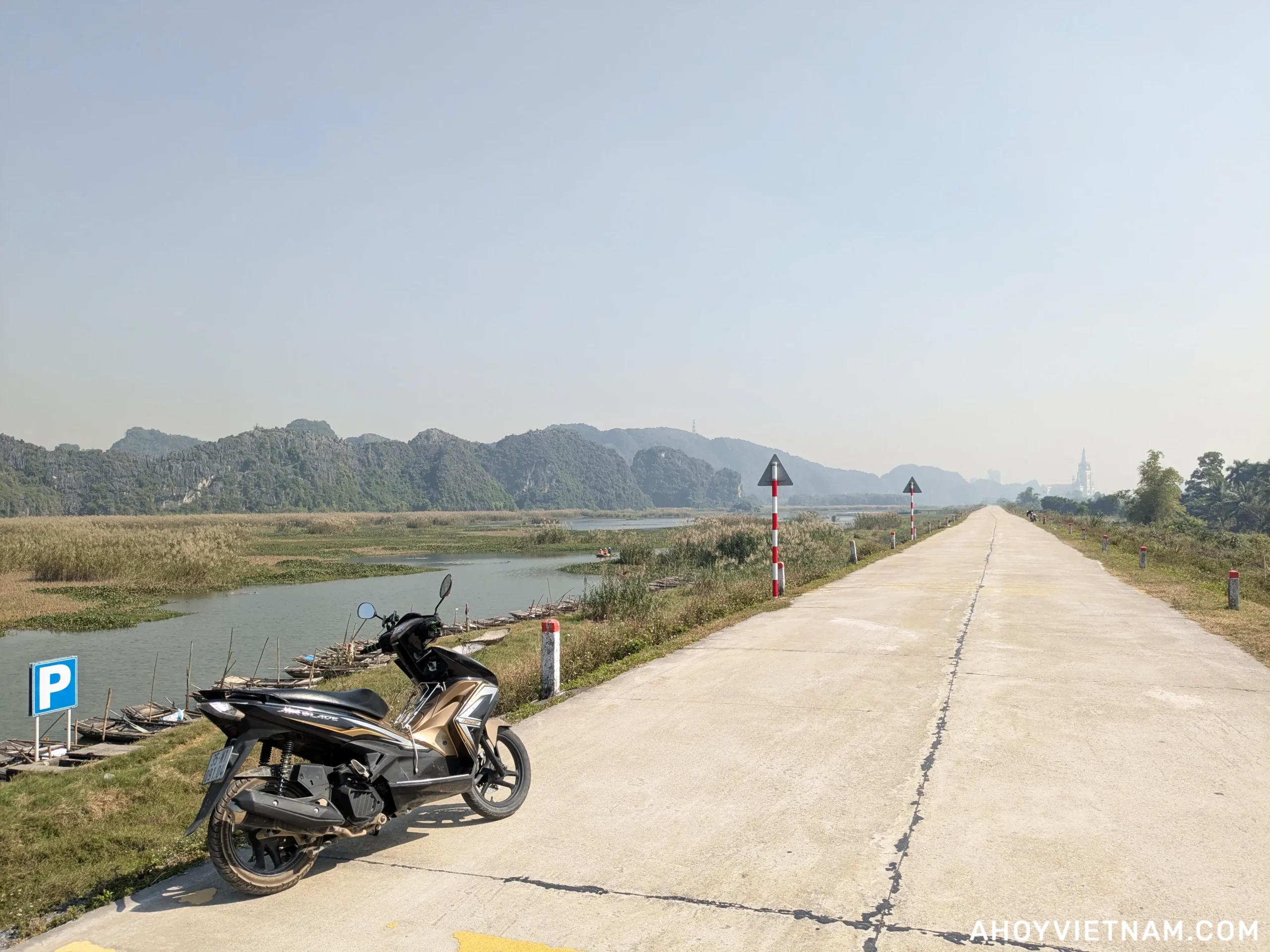
I’ve been riding a scooter daily since my first week in Vietnam in 2018. Like in the USA, Vietnam drives on the right side of the road. Scooters are a staple of daily life in Vietnam, comparable to the “family sedan” in the USA — except on two wheels. I see families of four crammed onto one scooter every day.
🏨 The Oriental Jade (see on Agoda / Booking): This is a nice 5-star hotel in Hanoi, in a great location next to Hoan Kiem Lake
🏨 La Charm Hoi An (see on Agoda / Booking): This 4-star boutique hotel is in a great location in Hoi An Old Town
🌟 Tours & Activities: from Hanoi, this Ninh Binh, Trang An, and Mua Cave day tour, and from Ninh Binh, this Hoa Lu, Bai Dinh, Trang An, and Mua Cave tour
I love riding scooters in Vietnam; it’s been my constant favorite activity since 2018. It makes living in or exploring Vietnam very convenient. Nearly all of the research I’ve done for new articles, as well as all of my pictures and videos, has in some way involved me riding a scooter. I’ve logged hundreds of hours in the last eight years riding scooters in Vietnam, mainly exploring Da Nang, Hoi An, and Ho Chi Minh City.
When I started riding in Da Nang in 2018, I had no prior experience. No lessons, no guides. I learned everything through trial and error. My goal with this article is to provide a high-level overview so you’re not renting your first scooter blindly like I did. I’ll also share some personal tips for riding a scooter in Vietnam.
Vietnam Scooter Rentals: The Basics

License Requirements
The short answer is that you need a license or an International Driving Permit (IDP) from countries that participated in the 1968 Vienna Convention to ride any bike over 50cc. This disqualifies IDPs from the USA, Australia, Canada, Japan, New Zealand, India, and others. You can rent and ride a 50cc bike without a license. For anything over 50cc, you need a license or the proper IDP. You can also rent and ride certain electric scooters without a license.
If you drive a larger scooter without a license (or proper IDP) and you get stopped by the police, you’ll have to pay a fine and/or risk having the bike impounded. Also, if you get in an accident, your travel or health insurance would likely be void, and you also risk injuring a local, which could cost you a lot more financially (and legally) since you were driving without a license.
Having said that, many shops rent scooters to people without a license. I cover different bike sizes below, but you’ll easily be able to rent most of the popular sizes and models without having a license. It’s best to talk with the shop owner about the laws and what you can expect when renting and riding.
Scooter Sizes
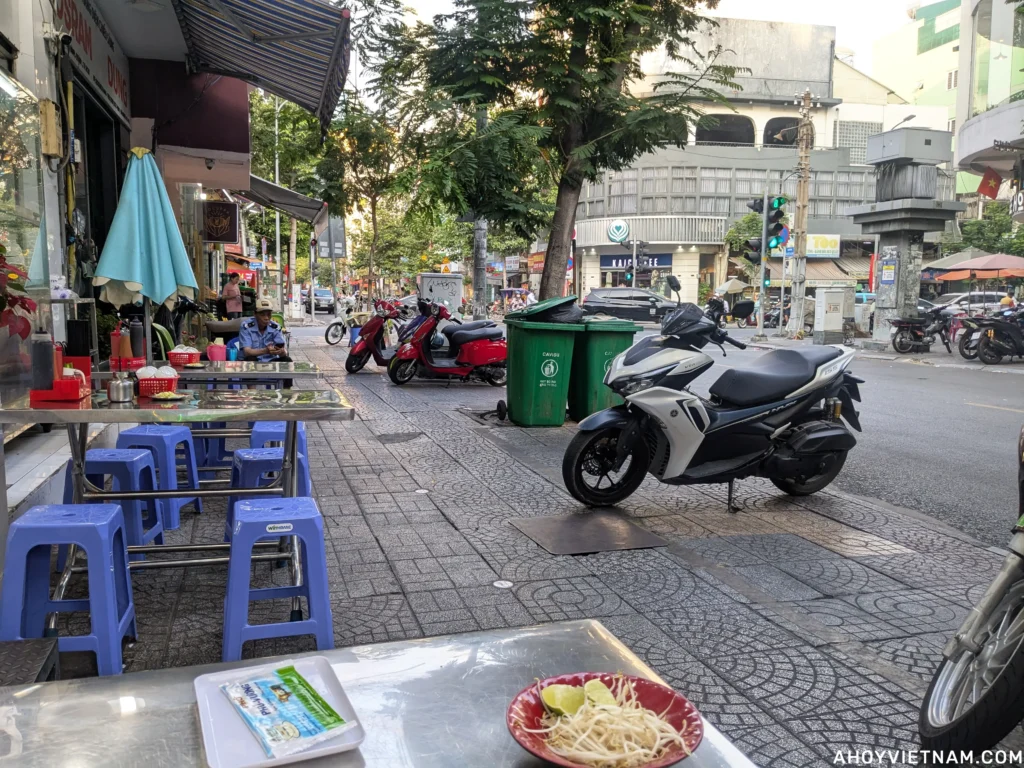
There are a lot of scooter and motorbike sizes, including some dinky electric bikes. You have the option of fully automatic, semi-automatic, or manual. For this article, I’ll only graze the common automatic scooters and sizes that are best for travelers.
50cc, 110cc, 125cc, 150cc, and some 155cc and 160cc bikes are what you should be looking at. A 50cc bike is perfectly fine for city cruising. If you plan on hitting the open road, you’ll want something more powerful. If you’re a bigger/taller person, you should look for the 150cc to 160cc bikes; otherwise, you might be uncomfortable.
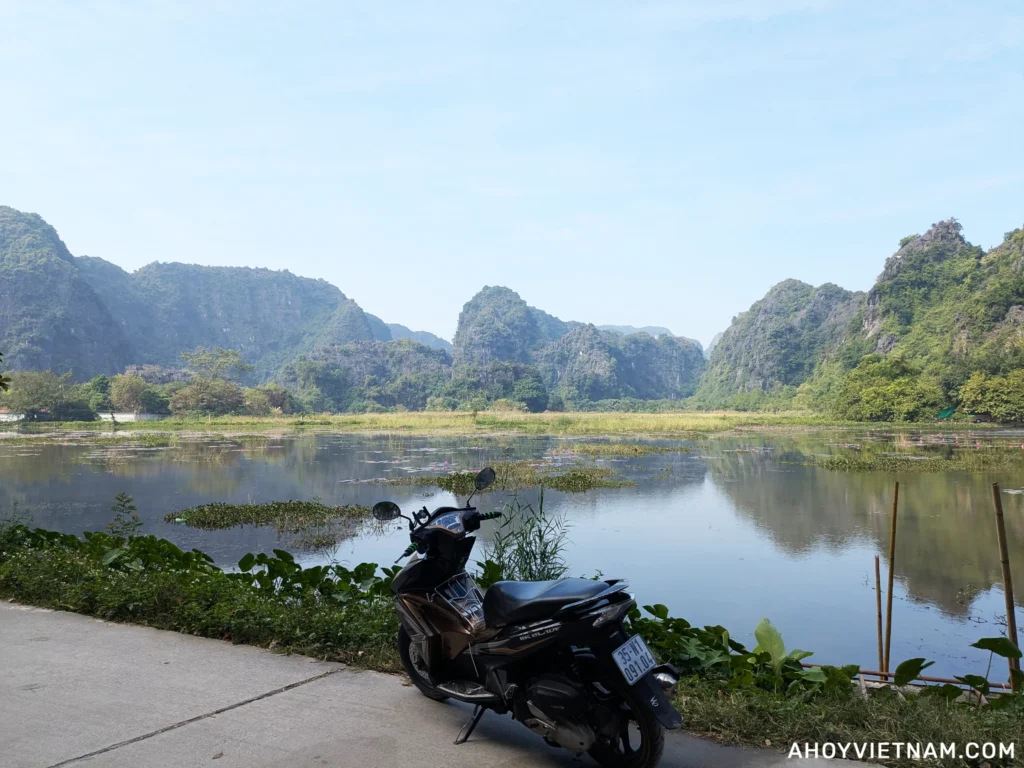
The Honda Air Blade 125cc is a great starter bike. It’s a good size, is reliable, and doesn’t guzzle gasoline. I rode one of these for years. There are several other 125cc bikes, but the Air Blade is a staple. If you don’t have a license and want to avoid any potential police trouble, you can go for the 50cc. There are several brands/models of 50cc bikes. This is perfectly fine for cruising around town. Here’s an example of a Kymco Candy 50cc.
For something a pinch stronger, the Honda Vision (110cc or 115cc) is a good choice.
Nowadays, I ride 150cc to 160cc scooters because they have bigger and wider tires, and the frames of these bikes are more comfortable for bigger people. I’m about 6 feet tall (hey, that’s tall here). I usually rent either a 150cc or 160cc Honda PCX, the 155 Yamaha NVX, or a 160cc Honda ADV.
I rode a Honda PCX 150cc from Da Nang to Hue last September. The ride was about 2 hours.
Rental Costs and Companies

The cost of renting a scooter in Vietnam will depend on where you’re renting, who you’re renting from, and for how long. Renting a scooter in Da Nang, Hoi An, or Ninh Binh will be cheaper than renting one in Hanoi or Ho Chi Minh City.
Shops geared towards expats will be more expensive, though they usually have newer bikes with better maintenance. You can find rentals from locals for cheaper, but the maintenance can sometimes be questionable. I’ve done it, but now I avoid the hassle, prefer reliability, and rent from places that I know take care of their bikes, even if it costs a bit more.
It’s not as black and white as this, though. In the touristy areas of cities, there are rental places geared towards travelers, and they have a lot of poorly maintained or old bikes and questionable business ethics. You don’t want to rent from somewhere shady. If a rental shop gives you weird vibes when you’re looking to rent, move on to the next shop. There are tons of good shops to rent from. It’s best to ask around for recommendations and read reviews.
For some rough costs, expect to pay between 80.000 VND and 500.000 VND for a daily rental. Shops have weekly rental rates, too, which will give a small discount. If you’re looking for monthly rentals, you can expect a bike to cost anywhere from 1.000.000 VND to 6.000.000 VND per month. These costs are for bikes between 50cc and 160cc.
I’ve added some of my recommendations below, which will give you an idea of pricing (depending on the city) and some pictures of different bikes.
In Ho Chi Minh City, I recommend DC Motorbikes and The Extra Mile. In Da Nang, I recommend Quang Nga. For Hoi An, I’d reach out to Anh Khoa. I’ve had nothing but good experiences with these companies. I’ve also read good things about this company in Da Nang and this one in Hanoi.
TIGIT (branches in Da Nang, HCMC, and Hanoi) is very respected for anyone looking to rent a bike and explore outside the city limits or do a longer Vietnam ride, like from Ho Chi Minh City to Hanoi or Da Nang to Hanoi, for example. They also offer motorbike tours.
Any decent rental company will have helmets. They’ll also show you all of the basic functions in order to operate the bike, open the trunk, and access the gas tank. Some of the scooters will have pre-installed cell phone holders on the bikes, which are great for navigating. You can open Google Maps and have the phone right in front of you.
Rental Deposits
Depending on how long you want to rent and from which company, you may be asked to pay a deposit. This is common for long-term rentals. For daily rentals, it’s inconsistent: you may or may not be asked, depending on the provider. A deposit is usually one of the following: your physical passport, a copy of your passport, or cash.
I rented from this place in Ninh Binh recently, and they didn’t ask for any kind of deposit at all (no cash or passport). I also rented from this place in Nha Trang recently, and they asked for a passport deposit (no cash). Both were good experiences.
I’ve never had any issues leaving my passport (for a short rental) or getting all of my cash deposit back for short or long-term rentals. So, just be prepared that you’ll likely be asked for some kind of deposit.
Where to Park
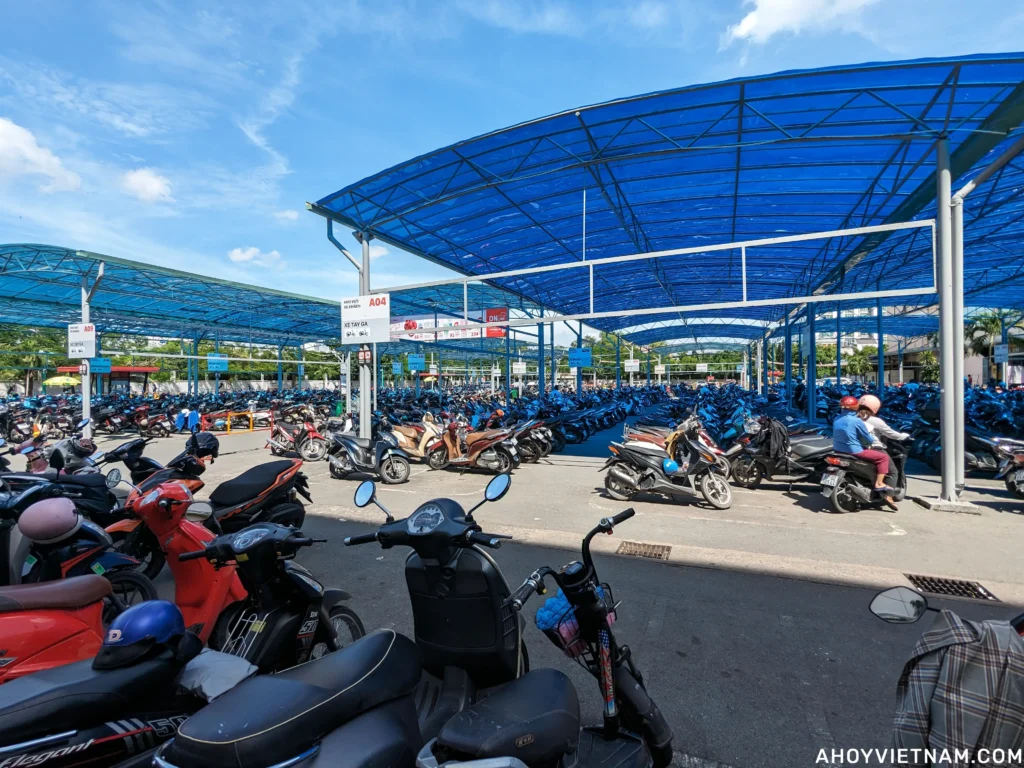
Parking a scooter will depend on where you’re going. If you’re visiting a restaurant or coffee shop, you’ll usually be able to park out front for free.
More popular places will have a dedicated bike security man who will give you a numbered ticket and then write the number in chalk on your bike. You’ll hand this back to them when you pick up your bike. Sometimes these guys keep mental track of the bikes, and they don’t hand out tickets at all.
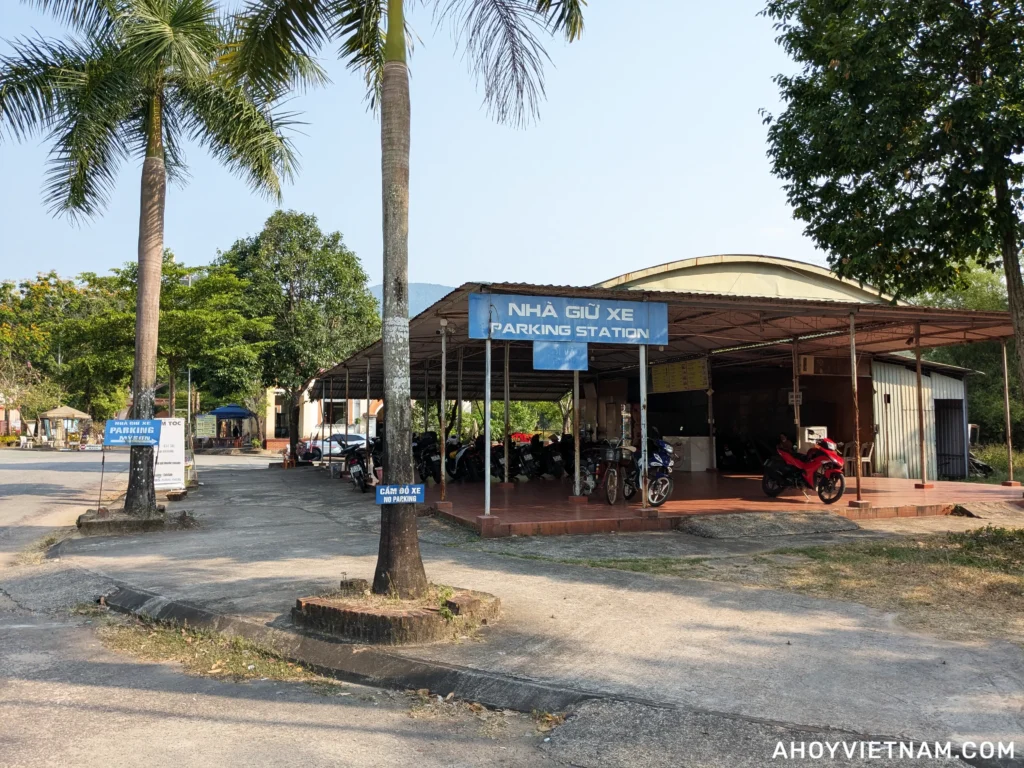
Popular tourist attractions usually have dedicated parking lots for scooters. These usually cost money, but sometimes they’re free. Supermarkets and malls have dedicated parking lots. Sometimes they’re off to the side or underground. Some of them are free, and others charge a small parking fee.
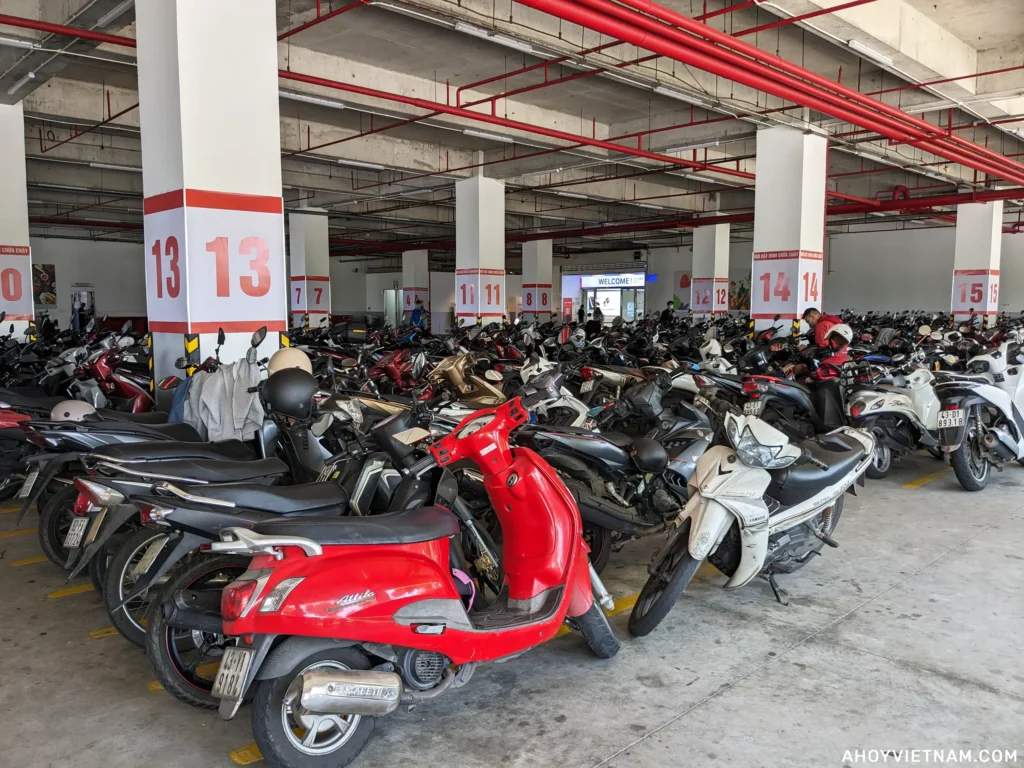
There are random parking lots or areas for scooters throughout the cities, where you can park your scooter if you want to walk around locally.
For all of the parking costs mentioned above, you can expect to pay anywhere from 2.000 VND to about 20.000 VND for parking your scooter. But 20.000 VND is on the high end, and I’ve only paid that a few times. The most common is about 5.000 VND to 10.000 VND.
Gas Stations
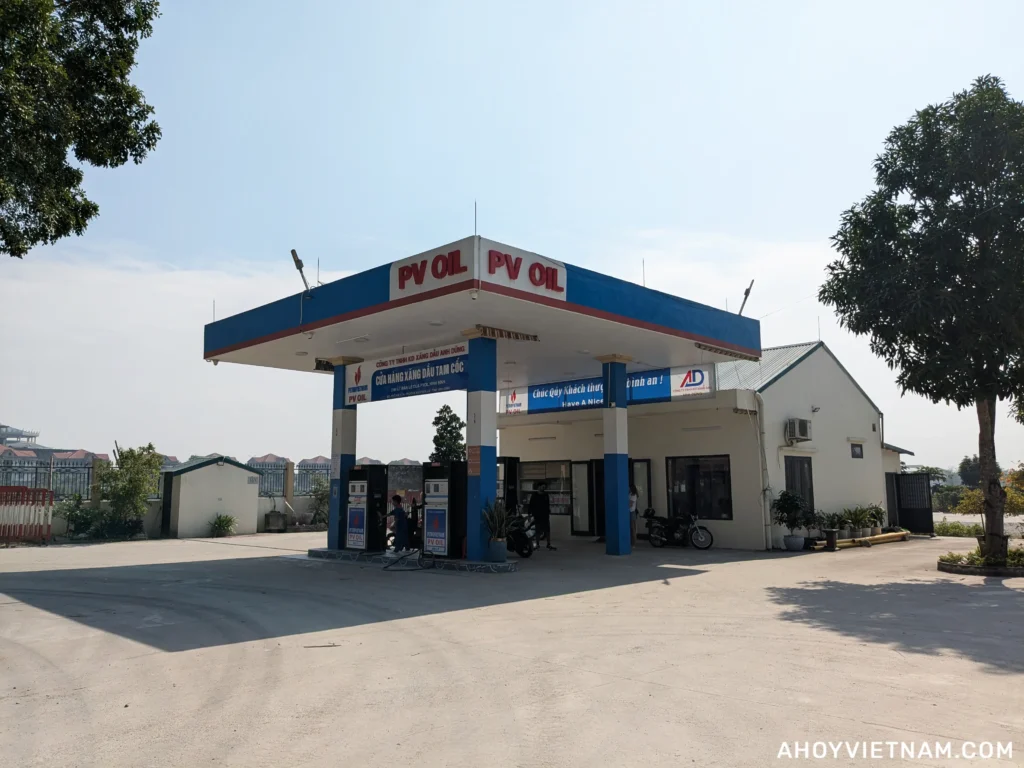
There are plenty of gas stations within the limits of Vietnamese cities, but they’re more spread out if you venture outside town. The Honda scooters are better on gas in my experience, whereas when I’ve rented a Yamaha, they guzzle gas.
Gas stations usually have separate areas for cars and scooters. If you’re unsure when you pull in, an attendant will usually point you to a pump. Everything is first-come, first-served. Expect other people to wedge their bikes in without respect for who arrived first. Depending on your scooter, it’s a couple of buttons to pop the gas lid, and then you’ll unscrew the top.
You don’t need to speak Vietnamese. You can give the thumbs up and say “full,” or you can show them a Vietnamese dong bill with how much you want. Adding 50.000 VND to the tank goes a long way. I usually add 100.000 VND to my tank, and it lasts several days, and I ride around every day. If you’re only renting for a few days, and the rental shop gives you a full tank or even 3/4 full, you may not even need to visit a gas station.
Tips for Riding Scooters in Vietnam

The following information is from my own experience of riding scooters in Vietnam for the last several years. It’s a collection of tips, things I’ve noticed, dos and don’ts, and what to watch out for.
Some random rules of the road

Bigger vehicles will take the right of way and expect you to yield or stop. A car or truck that’s stopped will pull out in front of you and expect you to avoid it, instead of waiting one more second for you to pass.
Circles or roundabouts are a giant yield-fest. Dealing with these at rush hour is one of the more challenging encounters you’ll face on a scooter.
People will drive down the wrong side of the road (along the right curb area, facing you) to avoid making a proper U-turn. They’re either looking for an opening to cross onto the opposite road, or they’re coming down the street to visit a shop or take one of the side streets. This is very common. So when you’re about to make a right turn onto a road, look out for people sneaking down on the right side (I.E., head-on collision). I’ve gotten in the habit of using my horn before most right turns, especially blind ones.
I’ve never seen a real stop sign. Yielding is rare. Courtesy yielding is rarer. If someone can sneak in front of you, they will. Instead of waiting one second for safety and smoothness, they’ll sneak in front of you if they can fit. Everyone’s seemingly in a rush, and it’s largely a “me first” attitude when they drive.
People (scooters, cars, trucks) will make a right turn onto your road without looking left beforehand at all. Not even a glance or a quick arched-eyebrow peek — nothing. Scooters will hit the right turn, full speed ahead, and join your lane without looking at all. I’m still amazed after seven years, and I see it all day.
Watch out for locals carrying things
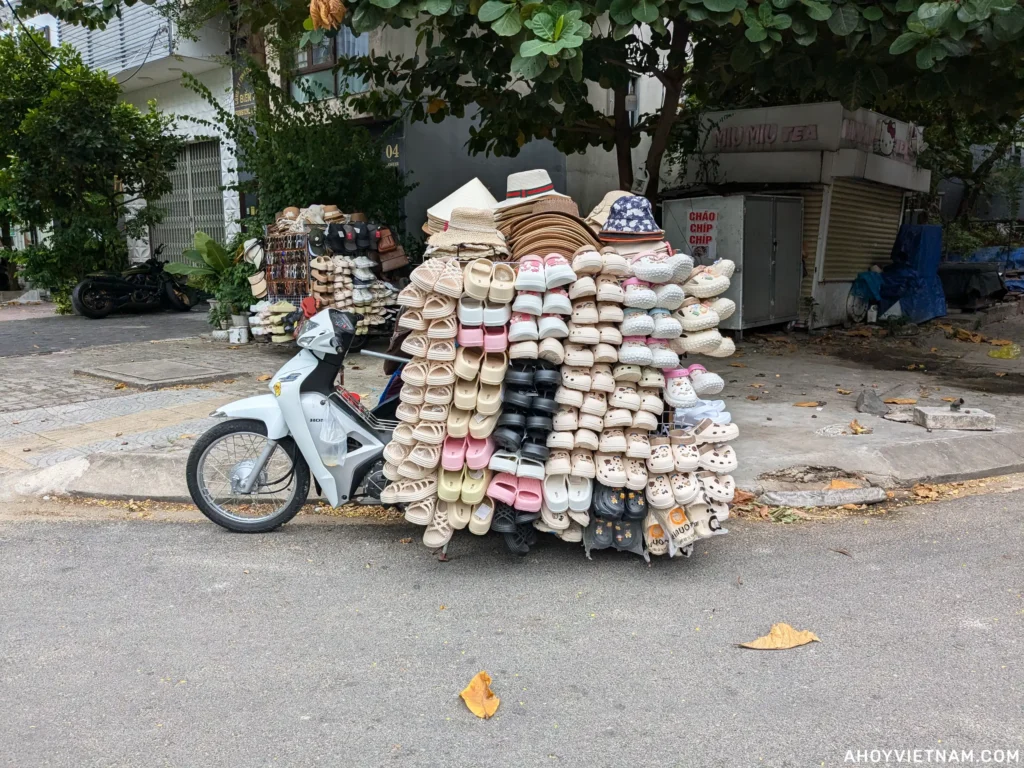
I’ve seen all sorts of things being carried on a scooter: someone carrying a huge ladder; someone with a long piece of wood, so when they made a turn, everyone on a nearby scooter had to duck; vendors who look to be hauling their entire store; someone with a ton of eggs; and so on.
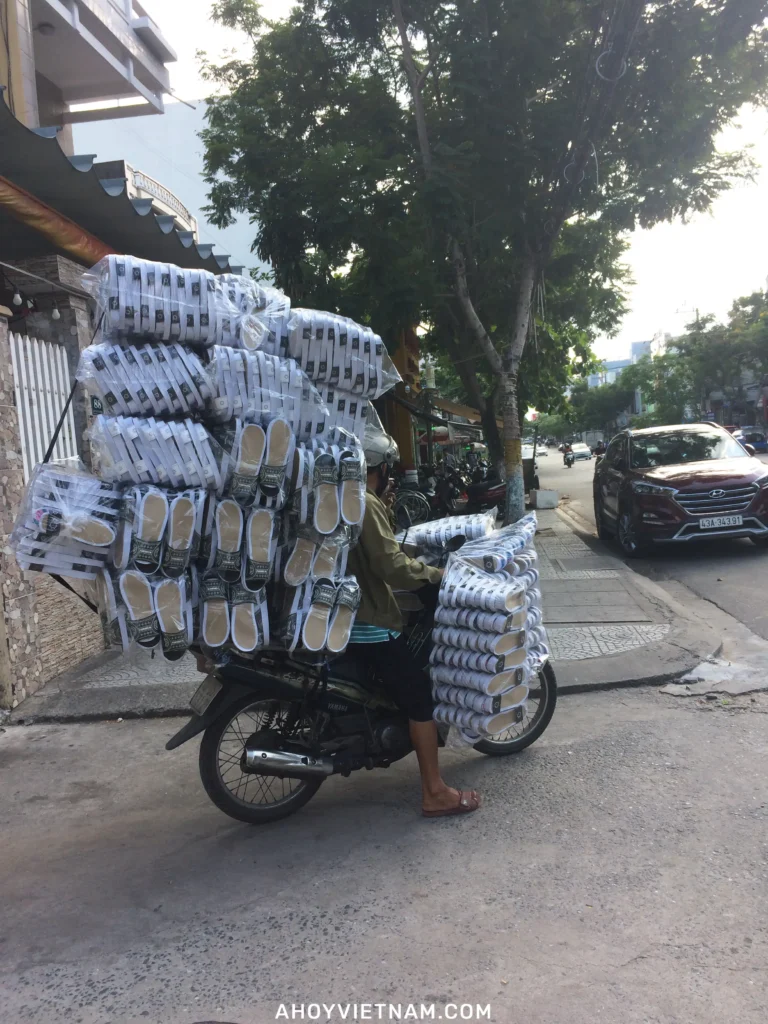
I’ve seen things fall off scooters and tumble on the road. So if you’re behind someone carrying a bunch of things on a scooter, watch out.
It’s not about going fast
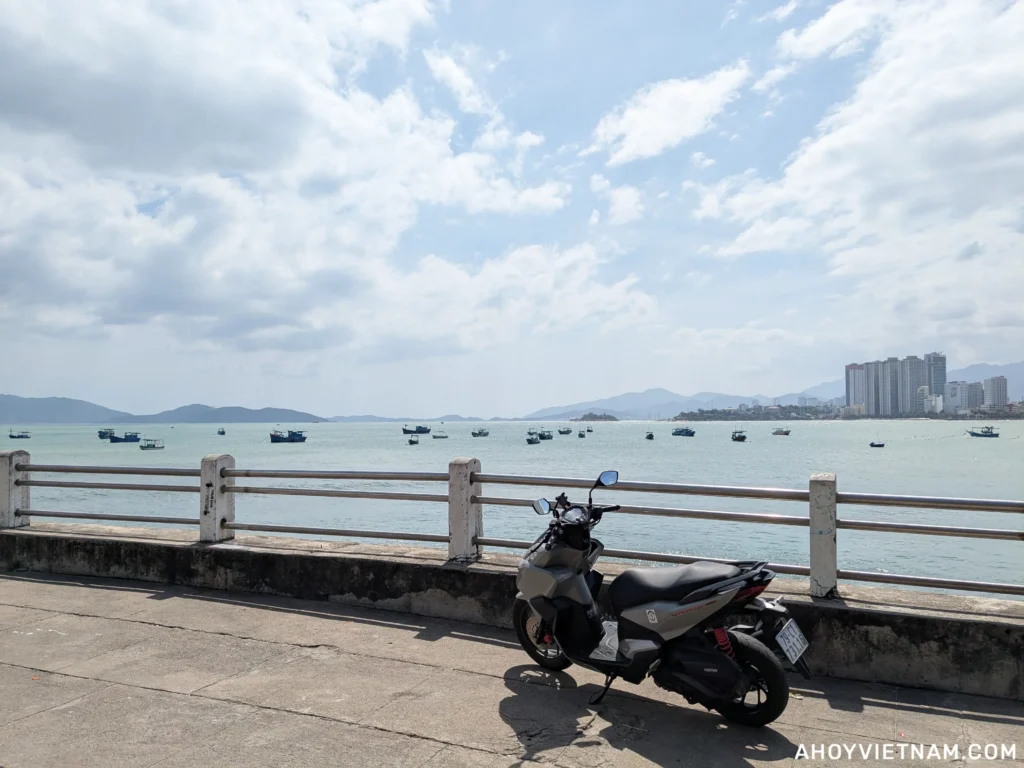
It’s easy to give it gas and hold on. It’s easy to drive on a straight road with minimal traffic at a steady speed. It’s less about going fast and more about balance and small and quick maneuvers. The most challenging situations to navigate are the roundabouts and the traffic jams. Slow movements. No sudden or impulsive maneuvers. Balance and handling are key.
Use your legs and feet
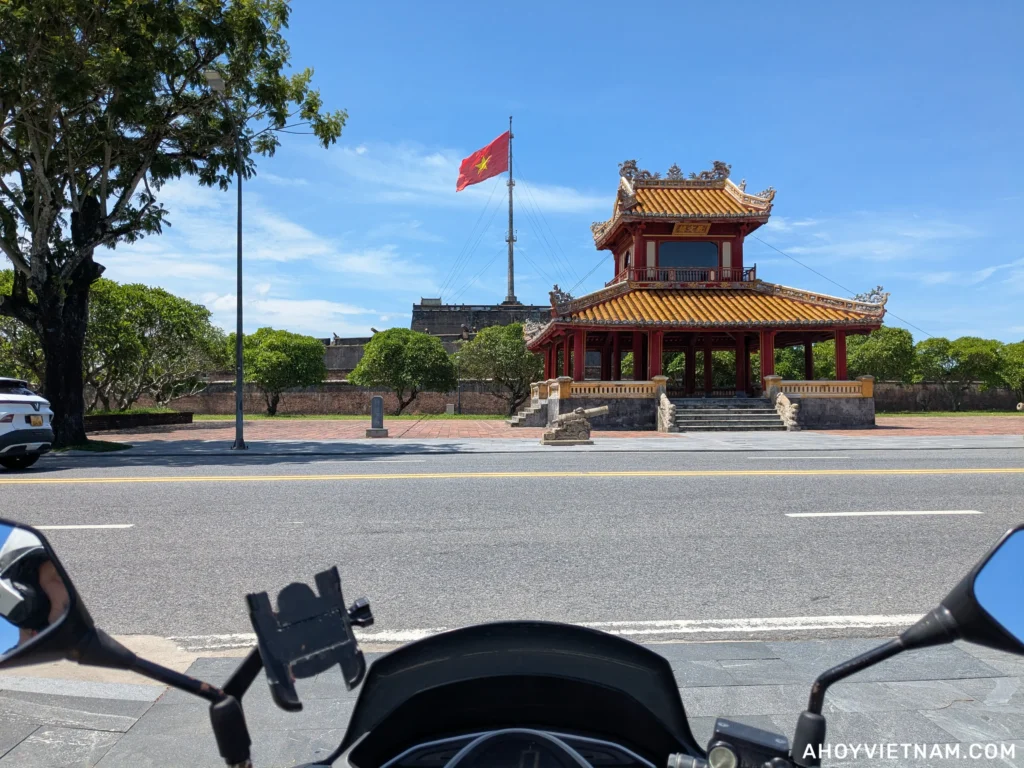
There’s a lot you can do with your legs and feet to help when riding a scooter. Get comfortable using your legs and feet when going up curbs to park, or when navigating through bumpy roads. Be ready to plant your feet to help maneuver. You can let your feet dangle off the side of the scooter, just a few inches off the ground, to help balance and be ready when going over bumpy terrain.
Wear sneakers or shoes
After riding for over seven years, I still wear sneakers most of the time when scootering. Rarely will I wear flip-flops or sandals. You’ll have to plant your feet often, and having sneakers provides much more stability. The back of a flip-flop or sandal can also easily get caught in something, causing you to fall when getting on or off the bike.
Adjust your mirrors
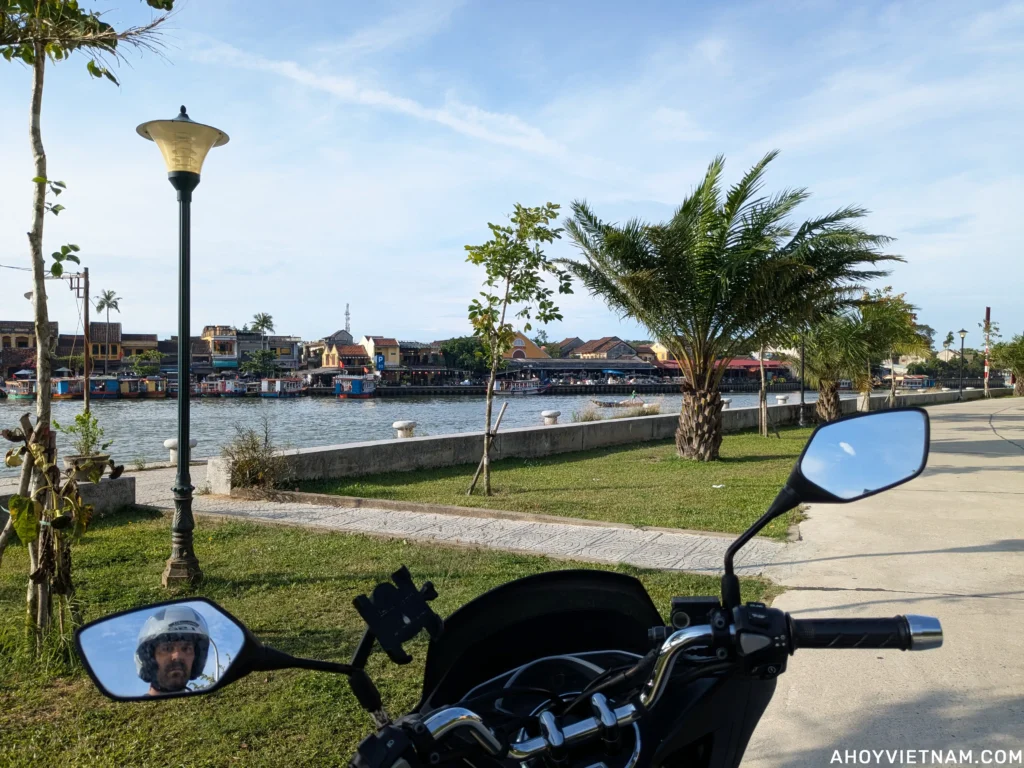
This sounds like common sense, but make sure to adjust your mirrors before riding. I’ve seen a lot of locals riding scooters with cracked mirrors, missing glass, or the entire thing broken off entirely.
Let cars or other bikes lead
A lot of times, you’ll be waiting to make a normal turn or enter a roundabout, and you’ll be with a group of other people. Let the locals “lead” by breaking the ice first, and then follow with the group.
Similarly, if you’re waiting to make a left turn, and there’s oncoming traffic in the opposite lane, wait for a nearby car to begin nudging itself out (or other locals on scooters) so you can follow them in making the left turn.
Let other people “be your shield” when possible.
Audio blind spots (deaf spots?)
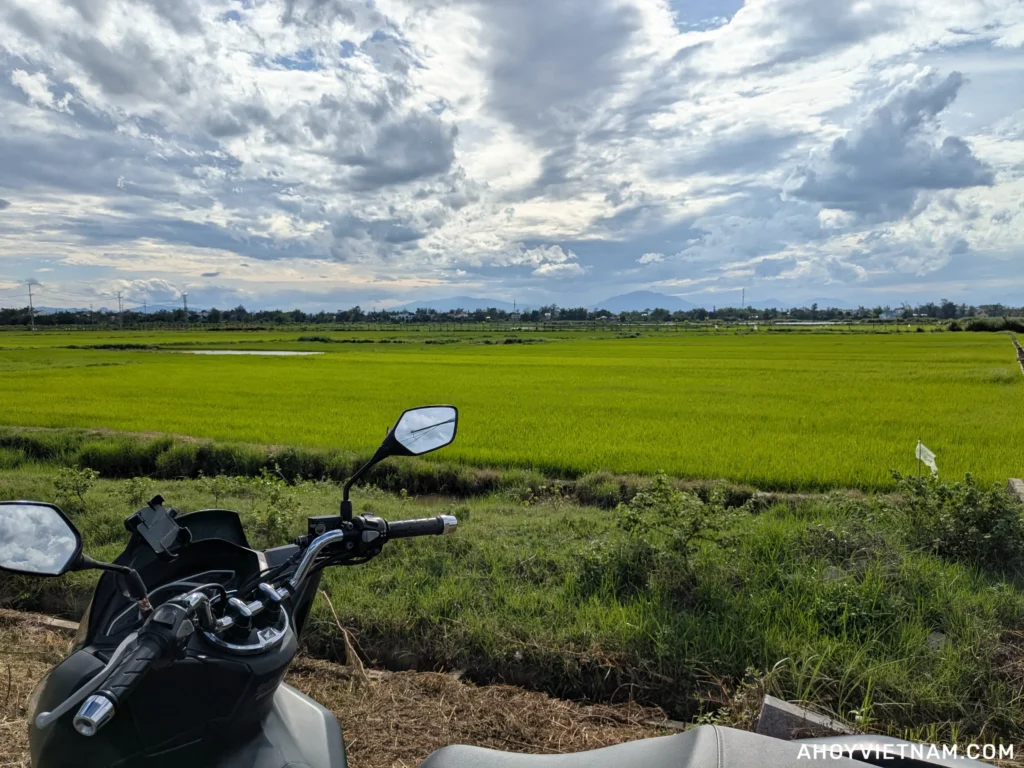
This is something I’ve noticed over the years of riding. You can be cruising along for a good bit, and maybe because of the constant wind (similar to a running fan), your senses can be dulled a bit. You may not hear or realize that there’s a scooter right near you in what would normally be a car’s blind spot. Get in the habit of doing an actual look, without relying on the mirror, before making any kind of maneuver.
The “hand wave”
Locals will avoid making proper turns or immediately go from the furthest right lane all the way to the left in a three-lane road while waving their hands in the air. They’ll stop in the middle of the road, attempt a K-turn, or do some other impulsive maneuver without a blinker, and the same thing: wave or shake their hand in the air. This is not a courtesy wave or a “sorry” wave; this is a “watch out, I’m coming” wave.
Running red lights
Locals often run red lights. You’ll be sitting at a red light yourself, and see someone on your side just fly through it without stopping. Sometimes, they’ll just treat it like a stop sign, and only pause in no man’s land, and then go through. I see this every day. People do it with their kids on the scooters.
So if you’ve got the green light, you need to watch for this. People who’ve got the red light (that didn’t just turn red) will try to sneak through. Plus, a lot of scooters and cars will go through their lights when they’ve just turned red, too.
Use the horn often
Treat the scooter’s horn as “informational.” It’s free to use, so use it often.
When I’m approaching a turn, I press it quickly a few times. If I’m coming up on a busy intersection, same thing. Sometimes, you’ll approach a situation that’s overloaded with activity. You’ll see a couple of cars on the street getting ready to pull out, scooters on both sides are congested, and people are walking on the sides of the street, all at the same time — toot the horn, it’s free to use. Make yourself heard.
I’m always hitting the horn. Sometimes I make music with it. People sometimes look, and I laugh, but that’s kind of the point: I want people to look. Use the horn often, especially if you’re going around a corner.
It rains often/suddenly
It goes without saying, but scootering is much different in the rain — and it rains often in Vietnam, depending on where you’re visiting. Normal turns and braking are entirely different on a wet road. There are also lots of metal grates and manholes on roads, which will be slippery.
Watch for car doors opening
Cars park along the right side of the road, so always watch out when riding alongside them. Drivers or passengers will sometimes open a door without paying attention.
Pack a poncho in the trunk
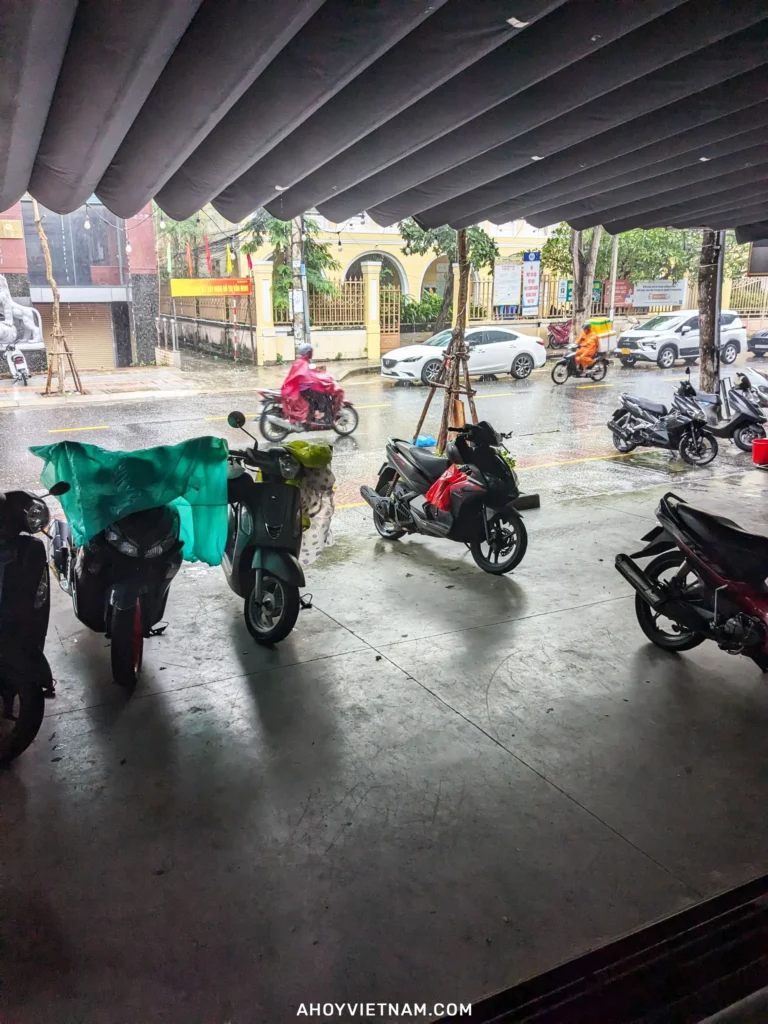
Ponchos are cheap and are sold at every convenience store, grocery store, or supermarket. It’ll be sunny when you leave, then you may get caught in heavy rain a few hours later. Having a poncho in the trunk is one of those things you forget about but are relieved to have when you need it.