I visited Hue recently to do research for this article and my newest batch of Hue travel guides. I spent a week there, exploring the city on my scooter, and I still felt like there was more I could see. Put simply, there are a lot of things to do in Hue, most involving its fascinating history of Vietnamese emperors.
Hue is often overlooked or skipped entirely, with most travelers preferring Da Nang and Hoi An when visiting central Vietnam. What I hear from most travelers in my Vietnam travel planning groups is that they’re “100% set” on Da Nang and Hoi An, but are wondering if Hue is worth visiting. I think it is if you can set aside at least 2 days.
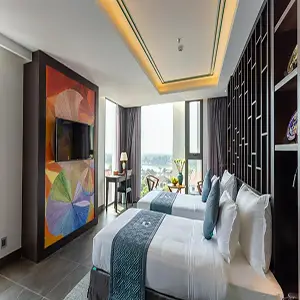
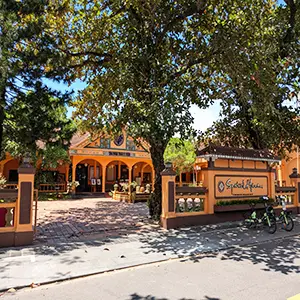
🏨 The Scarlett Boutique (see on Agoda / Booking): great value, great location, awesome staff
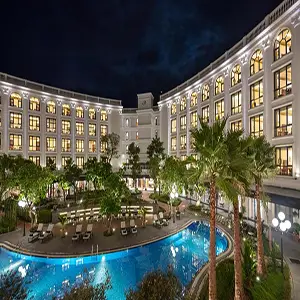
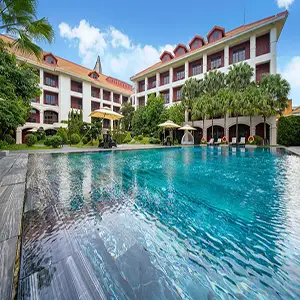
🏨 Senna Hue (see on Agoda / Booking): five stars, great outdoor pool, great location
🎟️ Tours & Activities: this Imperial City walking tour or this private Hue tour (customizable)
Hue is the former capital of Vietnam and has some of the most interesting history of any city in the country. The country’s last dynasty, the Nguyen dynasty, reigned in Hue from 1802 until 1945 for a total of 13 emperors, including one who had over 100 wives. The Imperial City inside the Citadel walls was the official residence of the Nguyen emperors and their families.
The Imperial City is close to the main part of Hue (just north, over the Perfume River). But south of the main city are several royal tombs, which, along with the Imperial City and several other sites, make up UNESCO’s Complex of Hue Monuments.
I’m normally an advocate for DIY exploring when traveling. It’s personally how I’ve discovered and learned a lot about Vietnam. But Hue is one of the few cities I’d strongly consider taking a tour of. There is a lot of interesting history that’s spread out a bit, and many tours will chauffeur you from place to place. If you’re not on a tour, you’ll want to use the Grab app to get around.
A couple of final important notes — First, the ticket booths at Hue’s UNESCO sites only accept cash. Second, Hue is not for travelers with mobility issues. Most of the historic sites themselves are spread out, with various staircases inside. To fully enjoy Hue, you’ll need to do a bit of walking.
If you’re headed to central Vietnam, here are things to do in Da Nang and more in Hoi An.
Where to Stay in Hue for a First Trip

The good news here is that choosing where to stay in Hue is very straightforward. The city’s UNESCO sites are scattered around (and outside) the city, so what you want to do is pick a hotel in a central part of the main area of the city. This way, you have easy access to food and other conveniences when you’re not out exploring Hue’s attractions.
Here’s a map that’s centered on the Senna Hue Hotel (see on Agoda / Booking). Anywhere in this area is a convenient place to stay in Hue.
You can walk across the Perfume River to the Imperial City from here in about 25 minutes. There are lots of people out and about walking around Hue, along the Perfume River, and over the bridges.
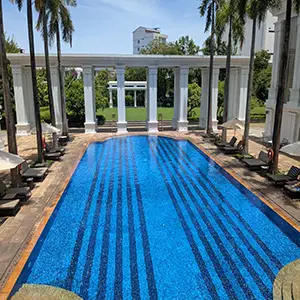
Besides The Scarlett Boutique, I also stayed at the Indochine Palace (see on Agoda / Booking), and this hotel had one of the better outdoor pools I’ve seen. The only downside is that the Indochine Palace’s location is a bit less convenient than The Scarlett Boutique and the Melia. Read my reviews of the Indochine Palace and The Scarlett Boutique.
🧺 Quick tip: Hotel laundry services are notoriously extremely overpriced. I got my laundry done at Dong Da Hue, see my Google review here. They had a fast turnaround and charged me 20.000 VND per kg.
Hue Imperial City
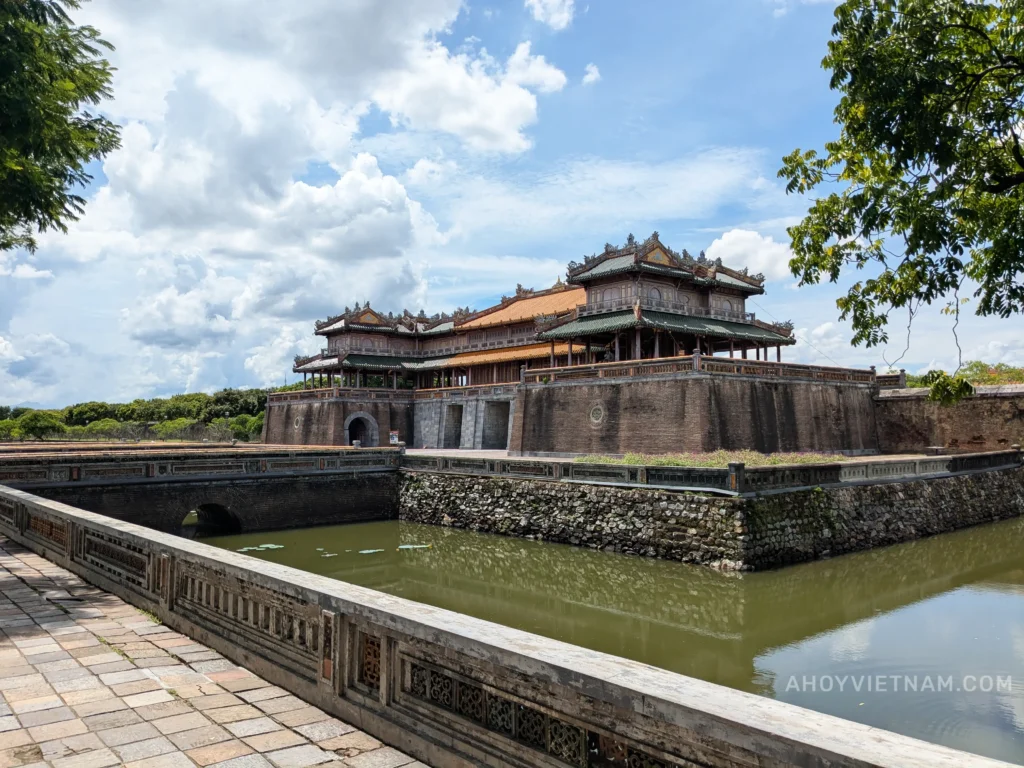
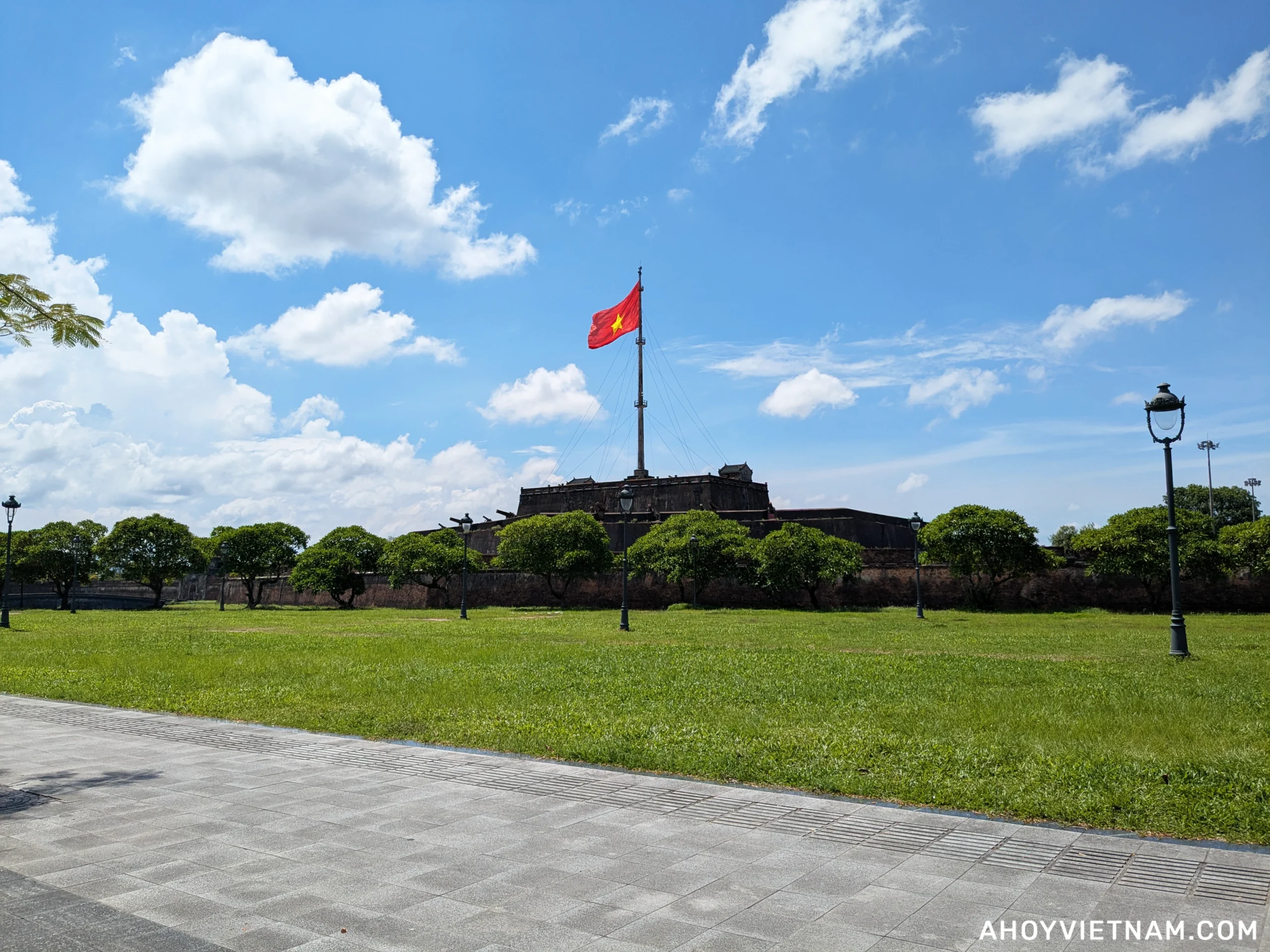
If you’re thinking of visiting Hue, the Imperial City is the biggest and most important reason to do so. It is the centerpiece attraction for really the entire city, and it’s much bigger than you’d expect. The area inside the Citadel walls is 520 hectares (1,285 acres). On my recent visit, I spent nearly three hours exploring everything on foot, doing about 12,000 steps.
But I’m happy to share that they have electric golf cart chauffeurs inside (something I didn’t know at first). These cost 400.000 VND (total) for 1 hour for up to seven people. This is 100% worth it. Inside the Imperial City, there are several areas with palaces, gardens, moats, etc., and the paths between them are long. But if you’re active and mobile, by all means, explore on foot like I did. I shared my review of the Imperial City (with a ton of photos) on Google Maps.
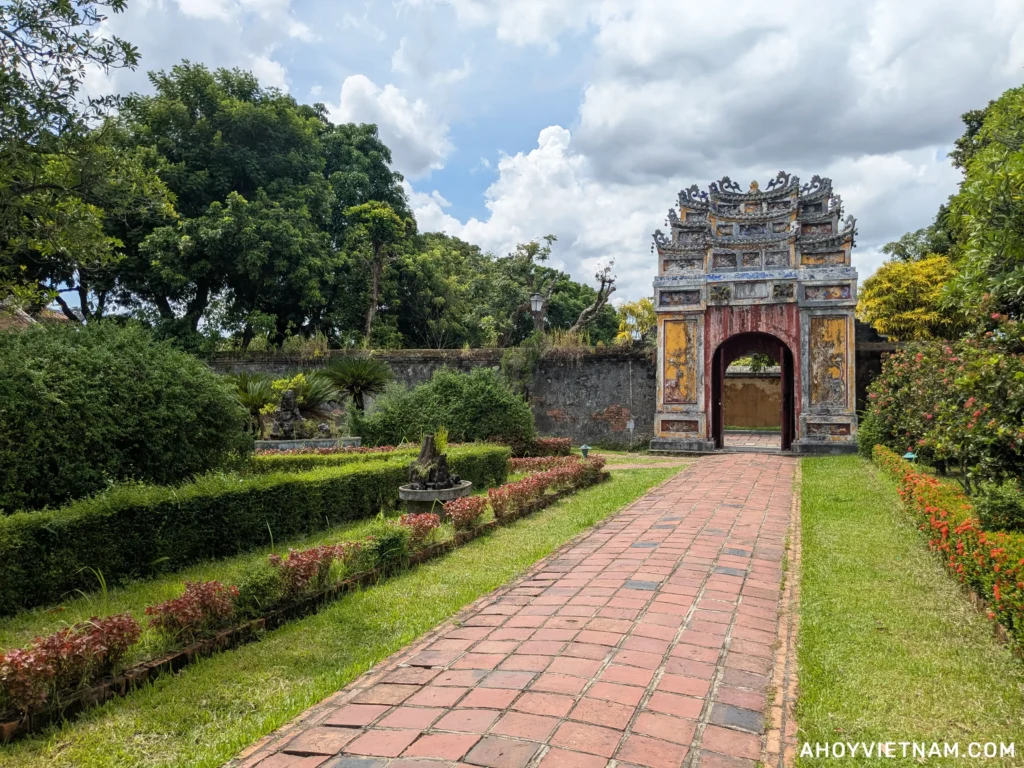
The adult ticket cost for the Imperial City is 200.000 VND. But if you’re planning to visit other attractions in Hue, like the royal tombs, you can buy a multi-site combo ticket at the Imperial City ticket booths. I bought the 4-site combo ticket for 530.000 VND, which included the Imperial City (my first stop) and the royal tombs of Khai Dinh, Minh Mang, and Tu Duc. Instead of buying individual tickets to the sites, the 4-site combo saves 120.000 VND. You’ll have 48 hours to use the ticket.
Khai Dinh Tomb
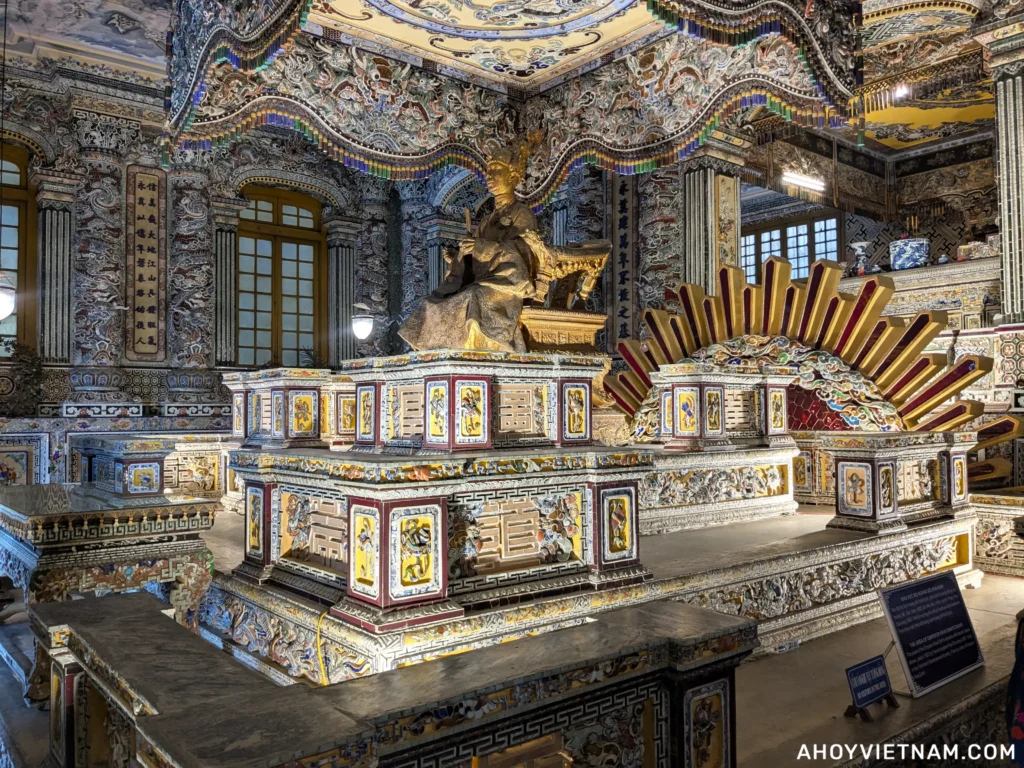
The Mausoleum of Emperor Khai Dinh is one of the three most popular royal tombs in Hue. Here’s the location. I’ll cover the other two next. Khai Dinh’s tomb is about 20 minutes south of the main area of Hue. Unless you’re on a Hue sites tour (here’s a good one), you’ll be using the Grab app to get around.
Emperor Khai Dinh was the 12th emperor of the Nguyen dynasty, reigning from 1916 to 1925. The tomb took 11 years to build, from 1920 to 1931. This tomb covers a smaller area, built into the hillside. You’ll need to climb several staircases to access the different parts. When I visited, I was in awe that the entire complex, statues, buildings, etc., were all built for one man.
Here’s a video I filmed at Khai Dinh’s tomb. You can see the stairs, and there isn’t any other way to access the upper levels (I asked staff about ramps or other ways up, and there are none).
If you don’t buy the combo ticket mentioned above, the cost for each popular royal tomb (Khai Dinh, Minh Mang, and Tu Duc) is 150.000 VND each. I would plan to spend around 30+ minutes here. Then you can head to the next tombs.
Minh Mang Tomb
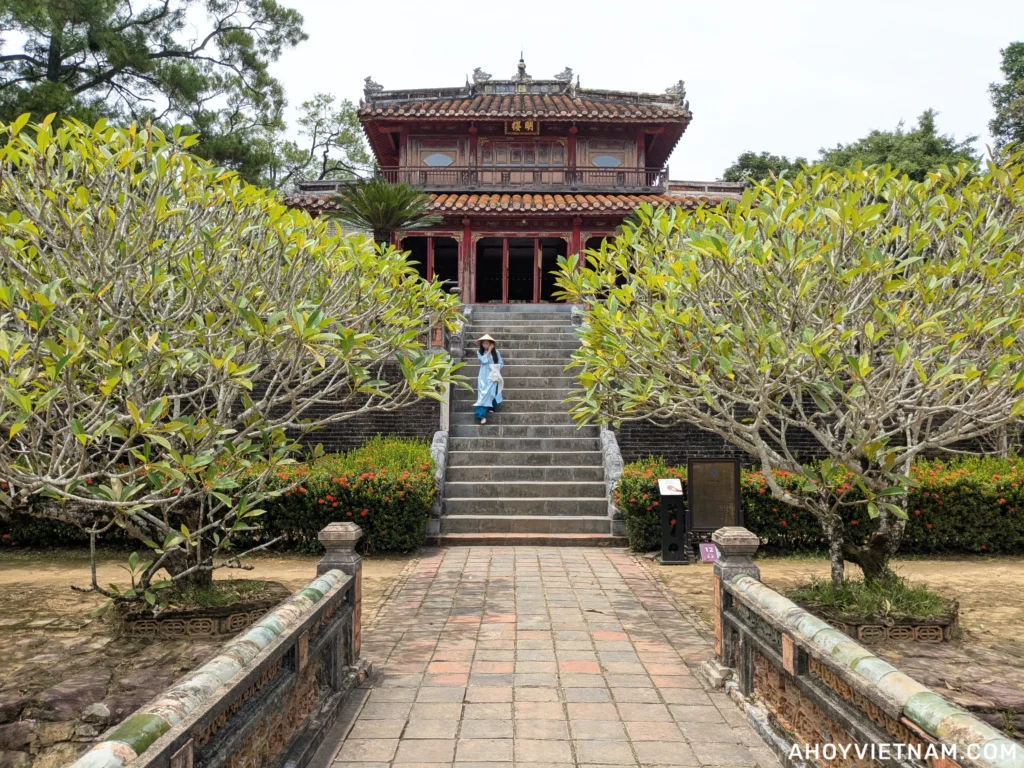
The Mausoleum of Emperor Minh Mang is about seven minutes west of Khai Dinh’s tomb. Here are the directions between the two tombs. I visited Khai Dinh’s tomb first, then rode my scooter over to Minh Mang’s tomb. At all the tombs, there are bathrooms outside or inside the grounds.
Emperor Minh Mang was the 2nd emperor of the Nguyen dynasty, being the fourth son of the dynasty’s founder, Gia Long. Minh Mang reigned from 1820 to 1841. Compared to Khai Dinh’s tomb, which is stone and cement built into the hillside, Minh Mang’s tomb is largely spread out in a wooded area, with bridges over some small lakes.
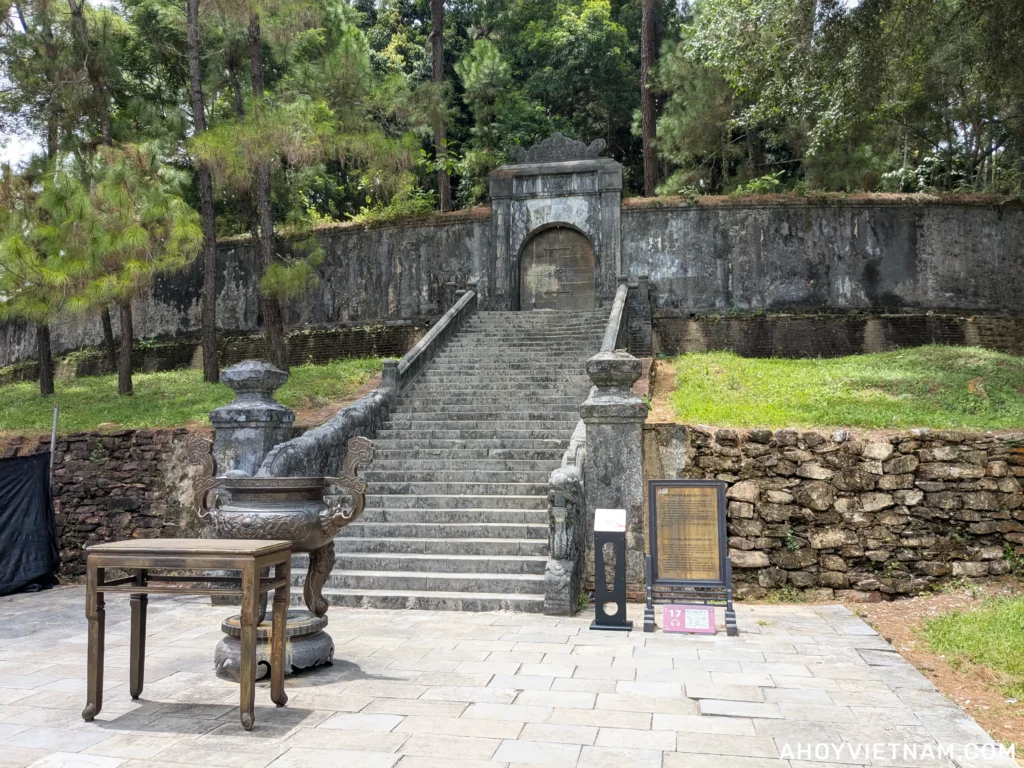
At first, the tomb grounds seemed pretty plain to me. But that’s before I discovered that it extends pretty far back, over several buildings, before getting to the area where his sarcophagus lies. And this is where it gets really interesting: his actual tomb is buried in a hillside, surrounded by a circular wall, which has been permanently sealed and is closed to visitors.
Tu Duc Tomb
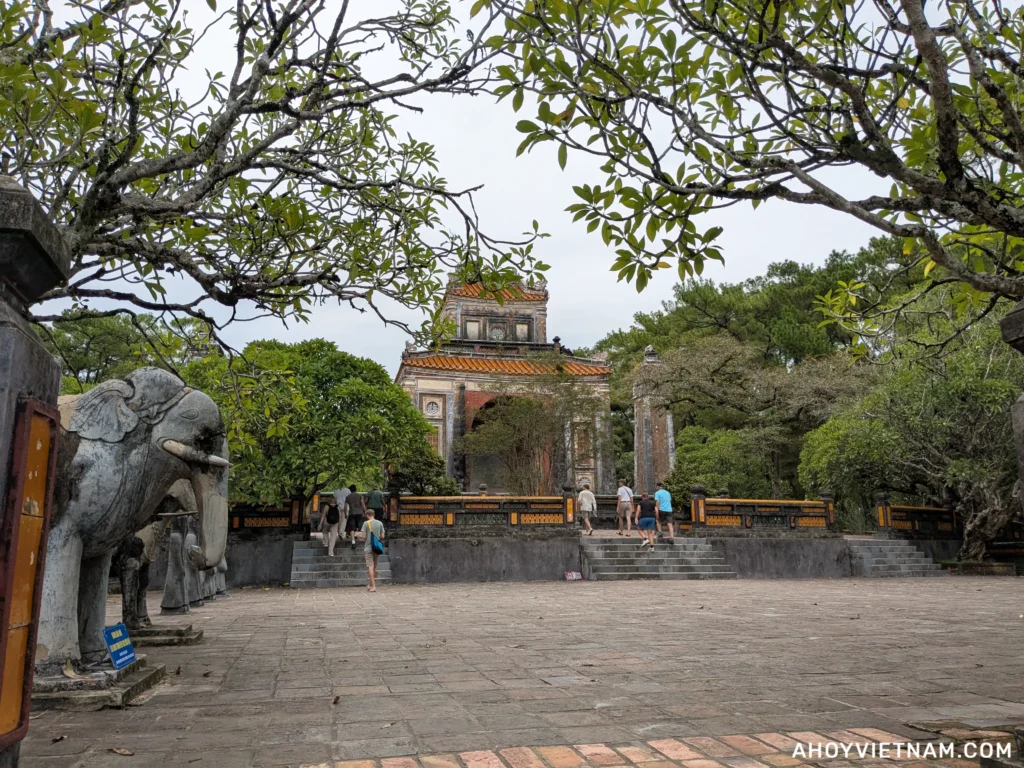
The Mausoleum of Emperor Tu Duc is part of the trio of Hue’s popular royal tombs. Of the three, this one is the closest to the main area of Hue. I decided to finish here and see it on the way back from Minh Mang tomb, but you could also start here. Here are the directions from Minh Mang to Tu Duc.
Emperor Tu Duc was the grandson of Minh Mang and the 4th emperor of the Nguyen dynasty, ruling from 1847 to 1883, making him the longest reigning emperor of the dynasty. He is known to have had over 100 wives and concubines but produced no heir. Tu Duc designed and built (through forced labor) his own tomb between 1864 and 1867.
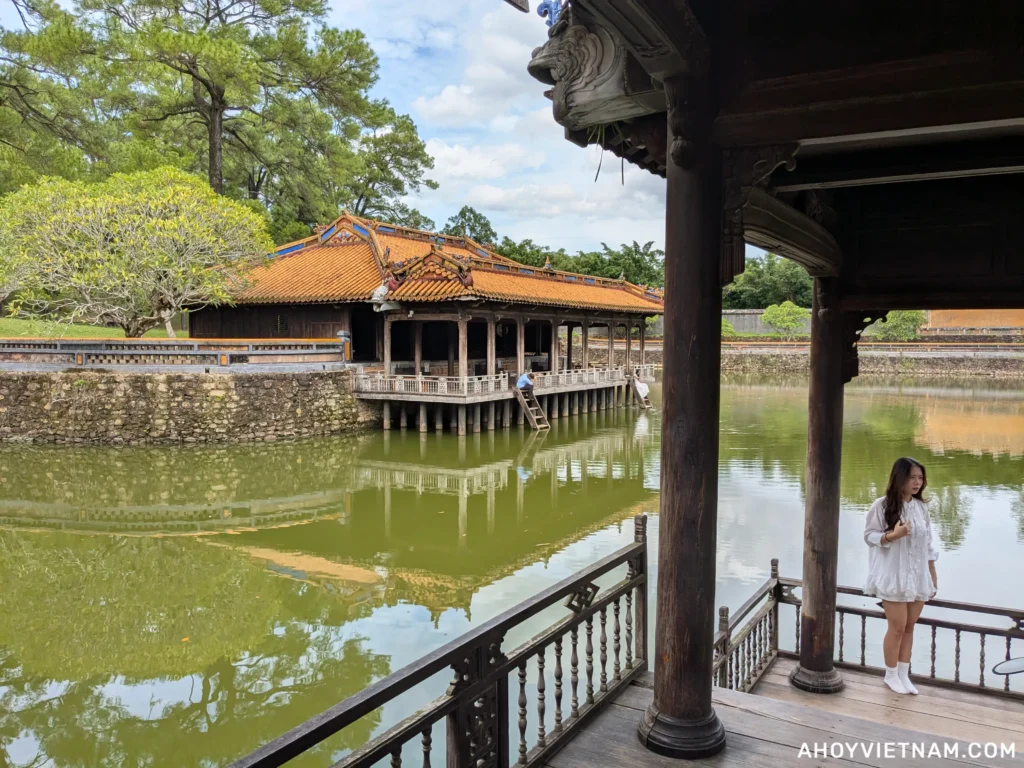
The Tu Duc tomb grounds are pleasant to wander. It’s built into a wooded area, with stone paths and a circular layout. There are also bridges over water, as the site is built alongside Luu Khiem Lake. This tomb was a lot more touristy when I visited. Outside, there are several souvenir shops and vendors who will be hollering at you to buy things — just be prepared.
Thien Mu Pagoda
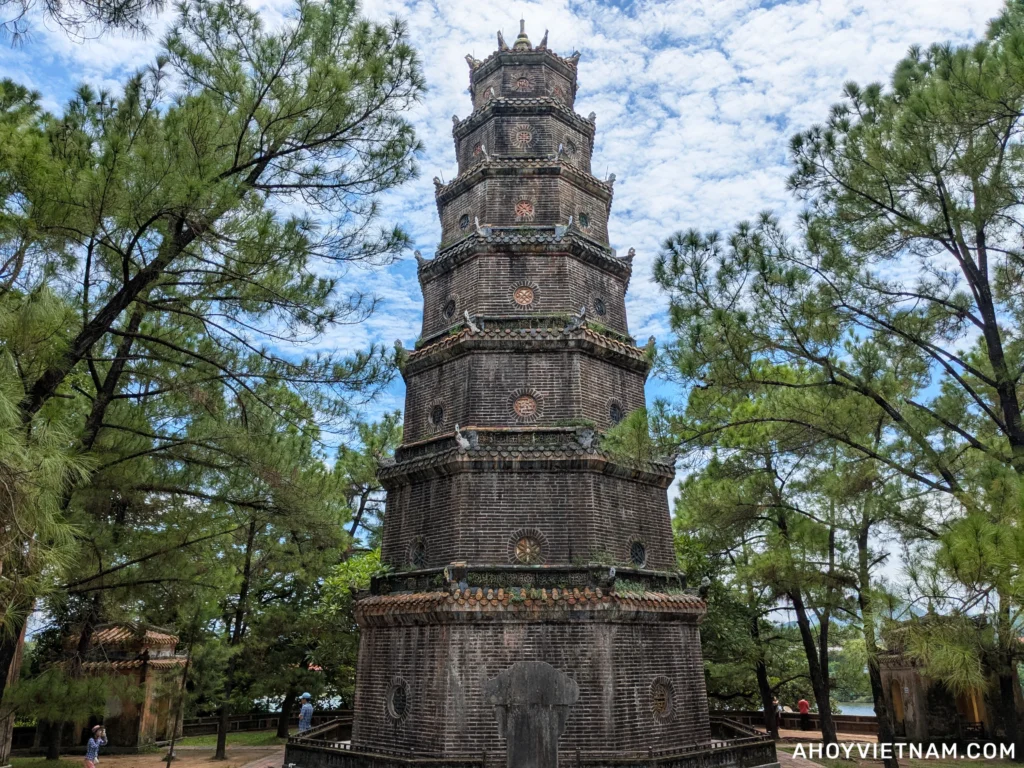
The Thien Mu Pagoda is an active monastery that’s free to visit. It’s southwest of the Imperial City, along the Perfume River. Here’s the location. There are some beautiful, far-reaching views of the Perfume River (if you visit on a clear day).
I filmed this video in front of the Thien Mu Pagoda, looking at the Perfume River and beyond.
The seven-story tower, called the Phuoc Duyen, was built in 1844 during Emperor Thieu Tri’s reign. The entire complex itself (the pagoda) was built on top of Ha Khe Hill in 1601. Unfortunately, this attraction, like most others in Hue, isn’t wheelchair friendly, as there’s a small but steep staircase to access the site.
This attraction is pretty touristy, but everyone I saw seemed to be very respectful and quiet while visiting. The grounds are very peaceful and well-maintained. Overall, this was a great and calming experience. And because of its proximity to the city, visiting here would likely be something I did often if I lived in Hue.
An Dinh Palace
The An Dinh Palace is one of the overlooked UNESCO attractions in Hue. When I visited, I was the only foreigner here. There were a lot of Vietnamese women in Ao Dais taking pictures and others having wedding photos taken. The palace is on the edge of the main area of the city, located here.
The palace was built in the early 1900s and was the home of Emperor Khai Dinh and his son and future emperor, Bao Dai, who continued to live here after his ascension. Tickets to the palace are 50.000 VND for adults, and free for children under 12. This is a smaller attraction that I would consider a bonus to your Hue itinerary. I spent about 30 minutes here when I visited.
Bun Bo Hue (Hue’s Famous Dish)
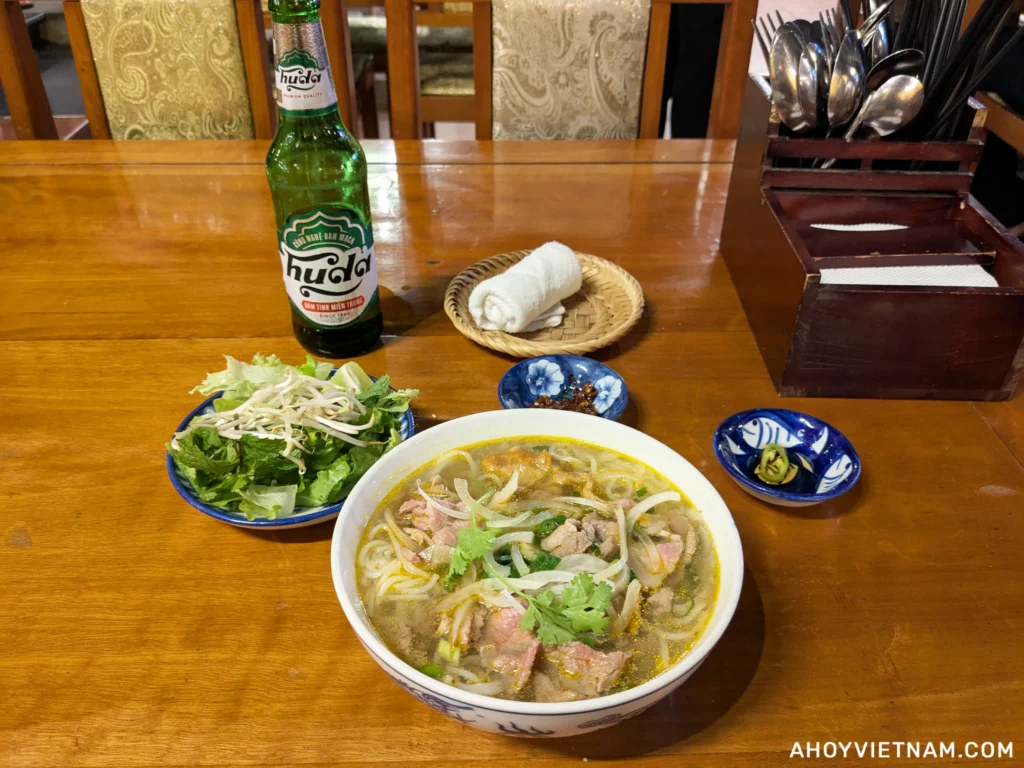
If you’re in Hue, and you eat meat, and you’re an aspiring fan of Vietnamese food, you have to try the local dish. Bun bo Hue originated in Hue, and there are tons of places serving it, with a lot of different family recipes. I had good bun bo Hue at N. Cafe Restaurant, which is just outside the Citadel walls.
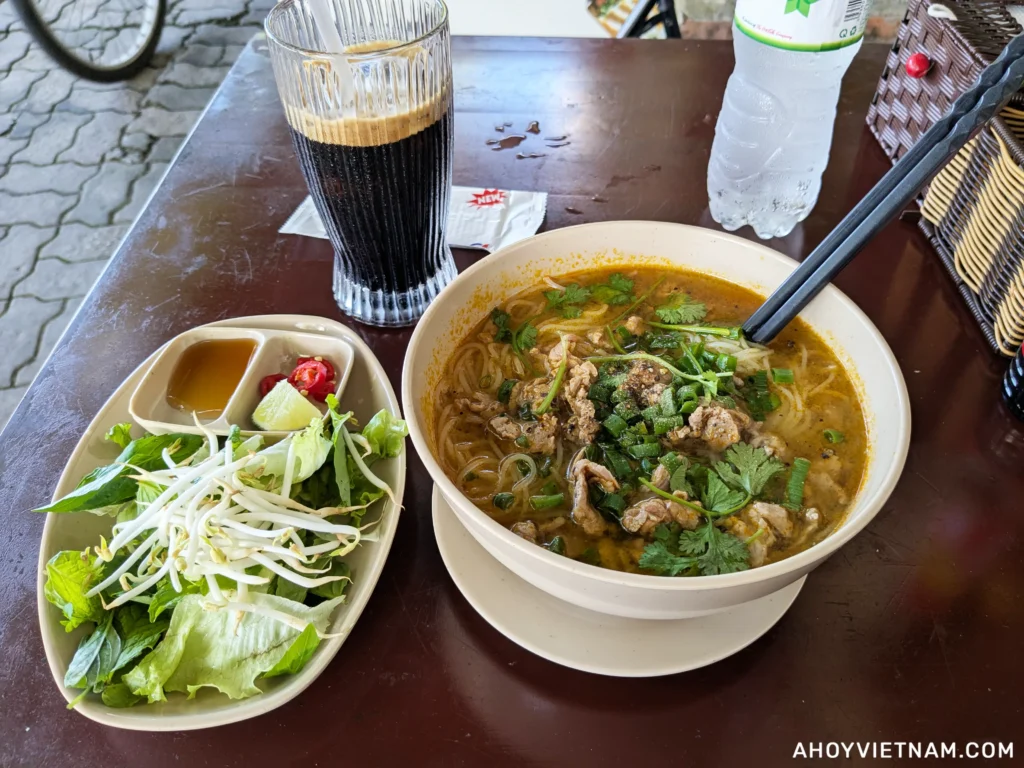
Bun bo Hue, at its most basic, consists of Vietnamese rice noodles and thin slices of beef in a flavorful broth. There’s usually some kind of herbs and seasoning, and certain places sometimes add other ingredients like pork knuckle to the dish. It varies from place to place. I eat this a couple of times per week, no matter where I am in Vietnam.
The Perfume River
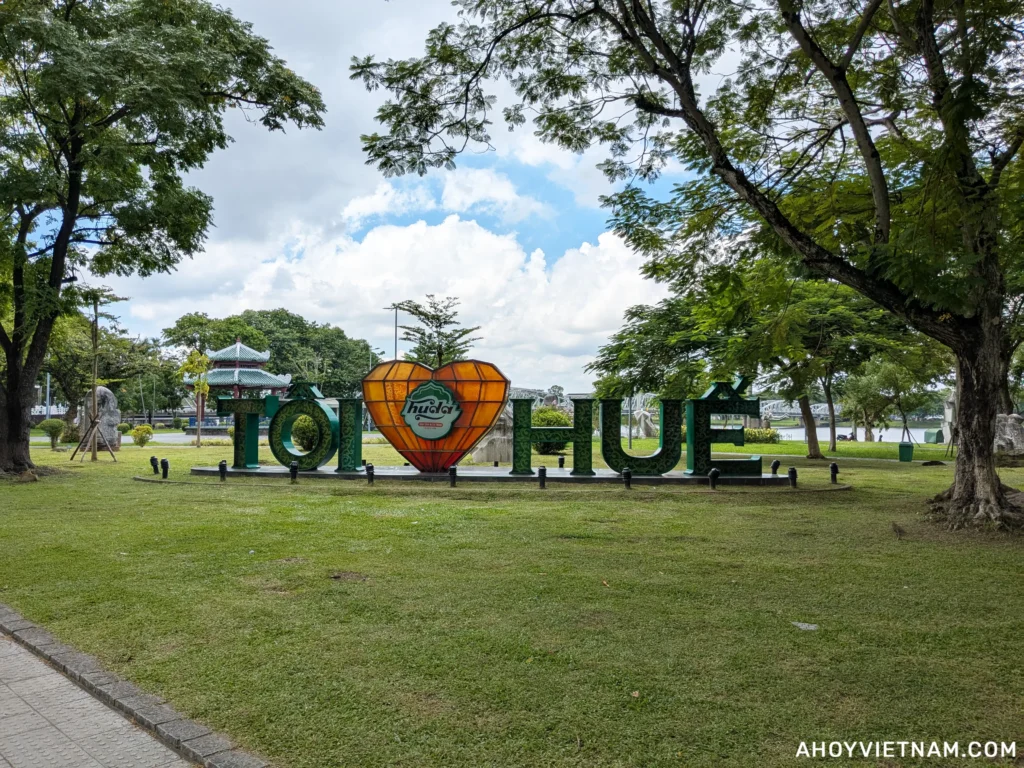
The Perfume River splits Hue into a northern and southern side, with the Imperial City to the north and most of the central city to the south. There is a nice riverside park along most of the southern side of the Perfume River called February 3 Park. This is a really nice area for either morning or evening walks.
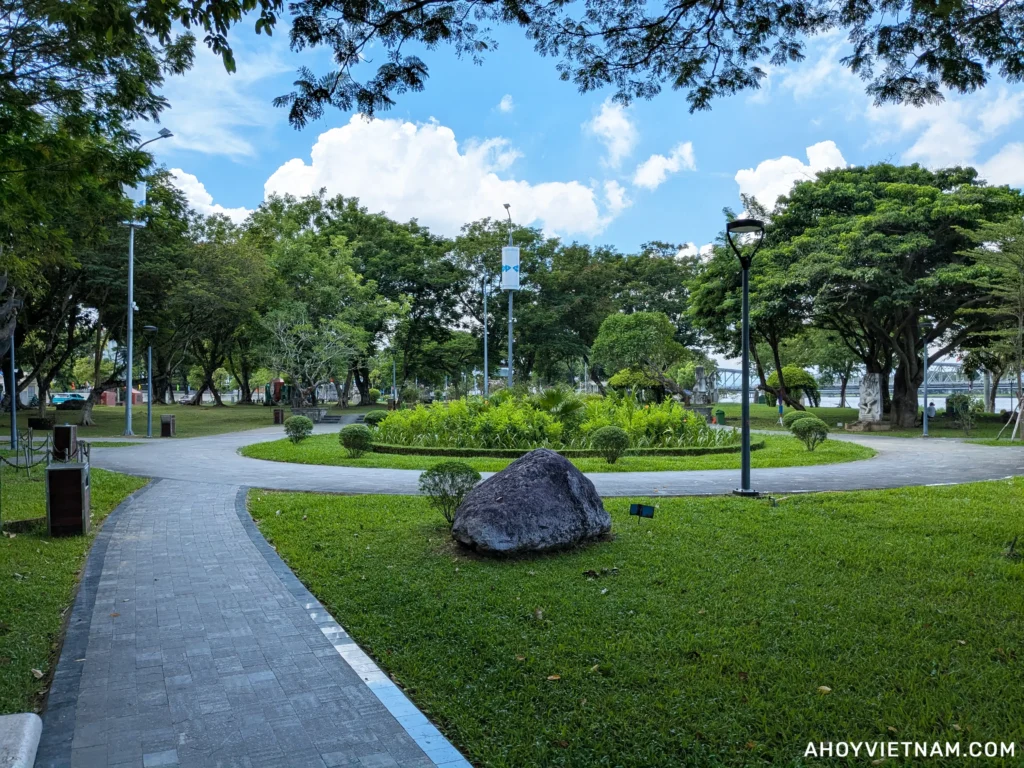
There’s actually a riverside area with walking paths on the northern side of the river, too, which is also pretty clean, but it’s much less “happening” than the southern side of the river. I walked through the park and along the paths on the southern side a few times, and it’s a really laid-back, authentic experience. At night, one of the city’s walking streets opens up along the riverside, called Nguyen Dinh Chieu Walking Street.
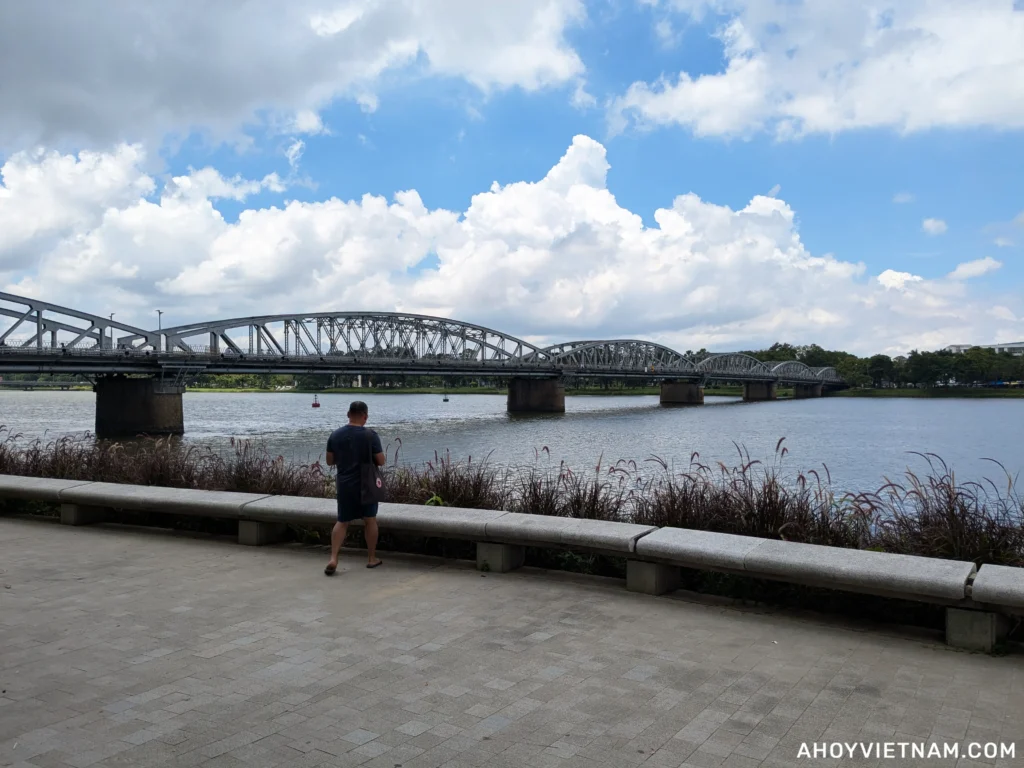
The oldest hotel in Hue (built in 1901), the Saigon Morin (see on Agoda / Booking), is directly across the street from the park and the Perfume River. This hotel or anywhere around here would also be a great location to stay in Hue. This is only about 8 minutes from the Senna Hue Hotel.
Dong Ba Market
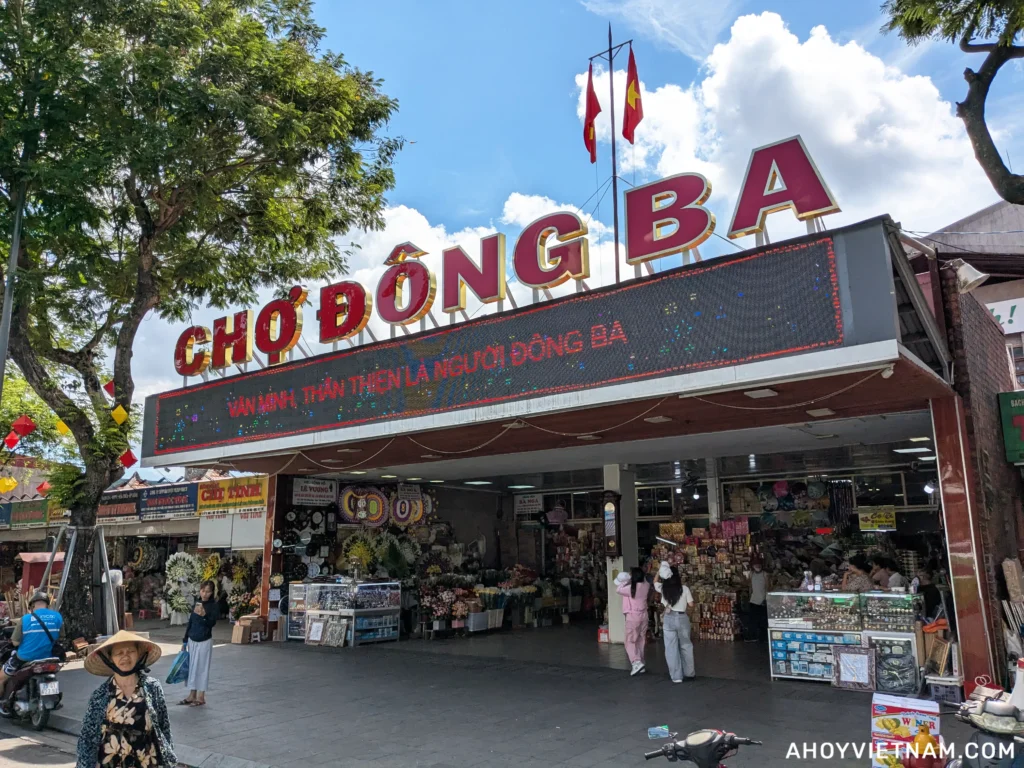
The Dong Ba Market is the most popular market in Hue. Visually, it’s the same idea as Ben Thanh Market in Ho Chi Minh City or Han Market in Da Nang. But the experience here is much more authentic, and when I visited, it was packed mainly with locals.
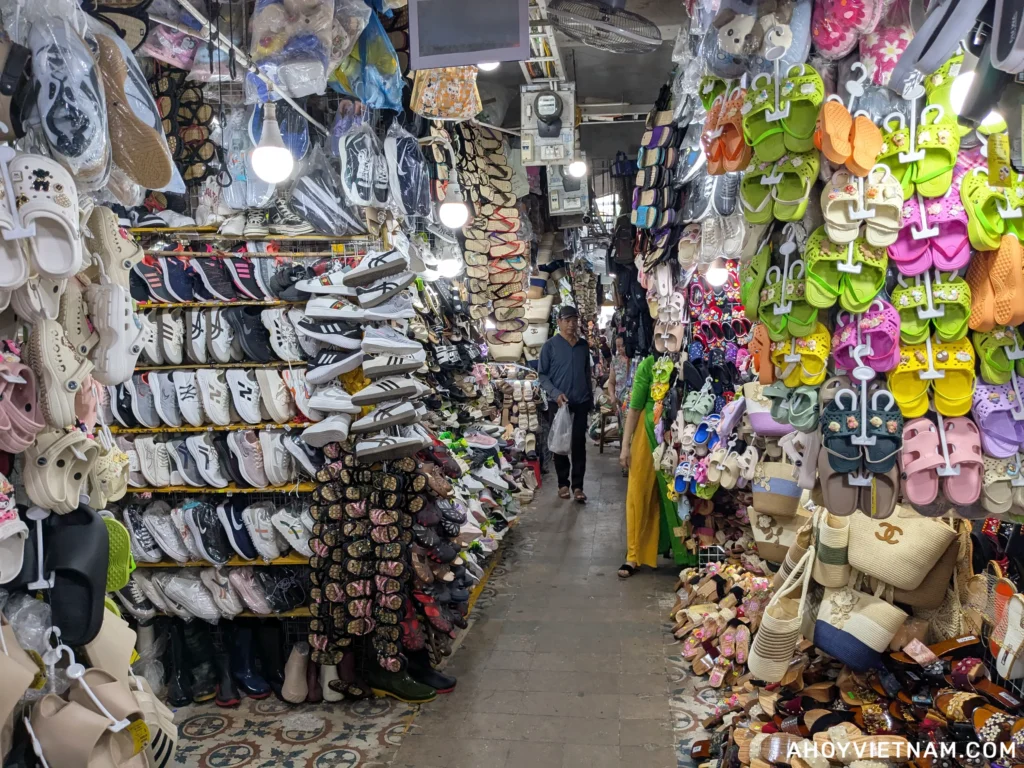
The best way to put it: there’s a lot of everything for sale. Several small pharmacies, jewelry stores, and money exchangers, flower vendors, food stalls, souvenir shops, tons of clothing items (hats, bags, sunglasses, shoes, sandals), backpacks, fanny packs…and housewares, in case you wanted to pick those up on your vacation.
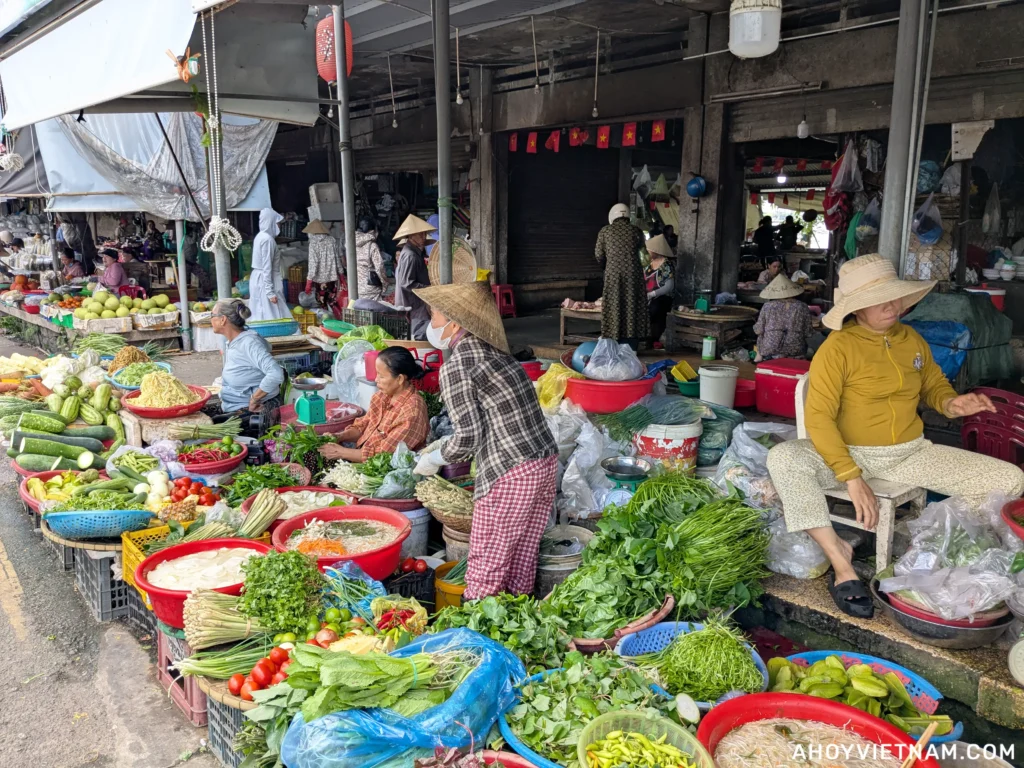
The Dong Ba Market is two floors, with a lot of clothing items upstairs. It hasn’t shifted entirely to being a tourist trap yet, but you’ll likely be asked to buy things or look at a vendor’s goods. Several ladies were corralling me to look at their “Nike” t-shirts. If you intend to buy something, be prepared to haggle here.
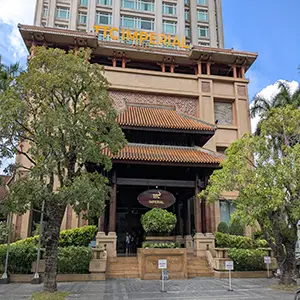
If you’re active and mobile, you can actually walk here over the Truong Tien Bridge, as the market is just across the Perfume River, north of the Imperial City. The TTC Imperial Hue (see on Agoda / Booking) is a very central hotel, near the foot of the bridge. I would definitely visit here (even without buying anything) because it’s a local market, which is always an experience in any Vietnamese city.
Lebadang Memory Space

The Lebadang Memory Space was a really surprising activity that I’m glad I did. Le Ba Dang was a Vietnamese-born artist from Hue who lived most of his later life in France. His “Memory Spaces” are intended as places to “wander, dream, and meditate.” This is a gallery of his work and was funded by his family and former students. The gallery is located here.
The gallery is built into a very green space in a rural area surrounded by mountains, trees, and a lot of nature. If you’re after something quiet and peaceful while visiting Hue, this is the place. This is a more expensive attraction, with tickets costing 200.000 VND each at the time of writing.

The Lebadang Memory Space is about 20 minutes south of the main area of Hue. You’ll want to hire a Grab taxi to get here if you don’t have a scooter. The gallery is actually in the same vicinity as some of Hue’s royal tombs; it’s about 5 minutes from Khai Dinh’s tomb (directions here), so you could include this somewhere in a tomb itinerary, too.
There’s also a smaller art gallery, the Le Ba Dang Art Museum, located here, along the Perfume River in the central part of Hue. So you can get a feel for his work without needing to travel south of Hue.
Rent a Scooter to Explore Hue
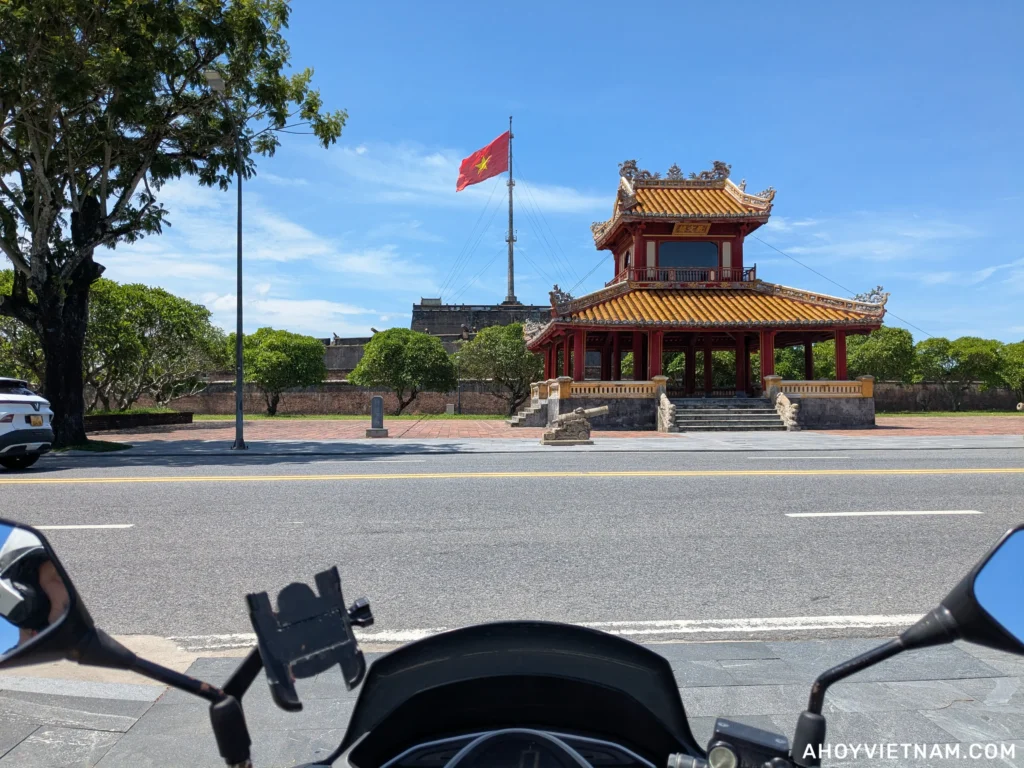
If you’re able to ride a scooter, getting out and exploring Hue is a pretty fun thing to do. It opens the whole city up, and it also makes getting between the attractions much easier and more efficient. You’ll be able to see more and visit more new places, like restaurants serving bun bo Hue!
I had a great time exploring Hue on my scooter, and all of the attractions I visited had scooter parking, with the most expensive being 5.000 VND. If you ride a scooter to Tu Duc’s tomb, the vendors out front will try to tell you parking is free, then hook you into buying something from their shop. Parking out front is free, and you don’t need to buy anything. I parked behind the ticket booth for free.
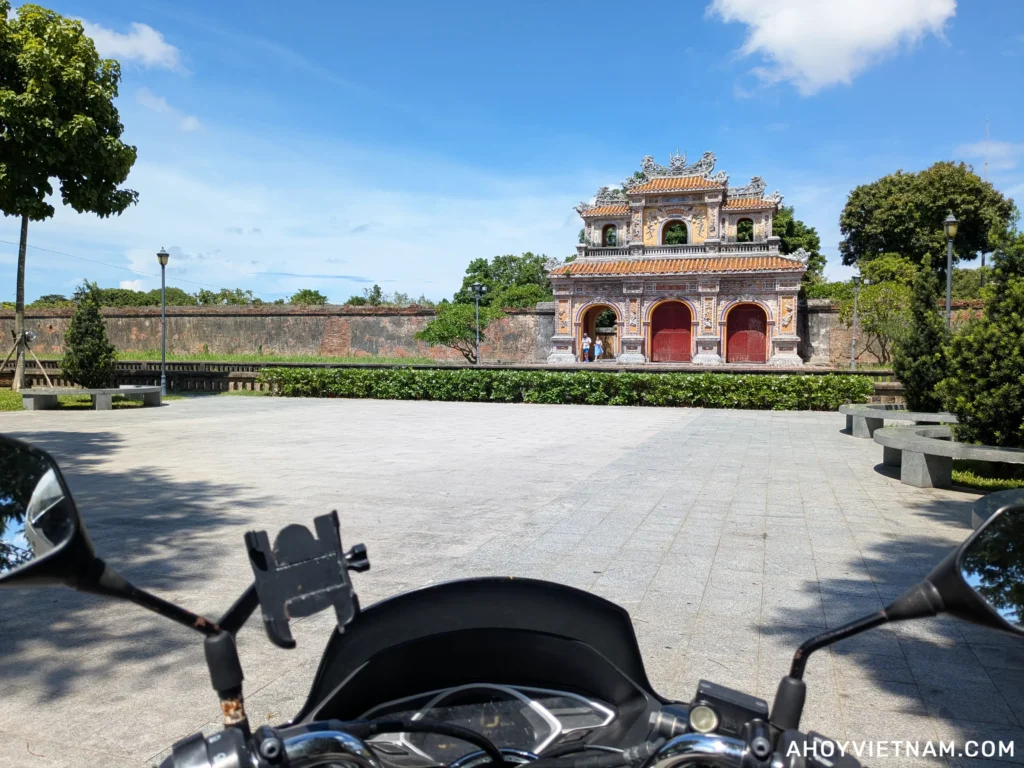
For scooter rental companies in Hue, look at places in the central part of town, so it’s easy to check out the bikes in person beforehand: Hidden Land Bikes (next to the laundry place I recommended above) and Motorvina are two choices to look into.
I rode to the Imperial City, the entire area surrounding the citadel walls, all of the royal tombs, up and down both sides of the Perfume River a ways, and throughout the central area of Hue. On my return trip to Da Nang, I rode over to the nearby beach, Thuan An, before following the road southeast back to the Hai Van Pass. There was an awesome view of Dam Cau Hai going over the Tu Hien Bridge on the way back.
Getting to Hue and How Long to Visit
If you’re set on visiting Hue, the biggest decisions you have next are how to get there and how long to stay.
Getting to Hue: You have a lot of options, from Grab taxis to private cars or shared van services, the train from Da Nang, or even flying into Hue’s airport, Phu Bai International. Personally, I ride my scooter from Da Nang to Hue over the Hai Van Pass, which takes about 2.5 hours. If I were scooterless, I would book a Grab taxi or private car.
How long in Hue: There are a lot of tours that depart from Da Nang or Hoi An and do a full-day tour of Hue. These are popular, and if you truly only have 1 extra day, then it’s worth it to at least experience Hue — this is one of those full-day tours.
My recommendation is to allocate at least 2+ full days to visiting Hue. If you have full trip flexibility, three or four days would be great, though I’d personally lean to four. I’m the kind of traveler who is fine if I end up having downtime as opposed to leaving a place too early, wishing I’d seen more.