In my Vietnam travel planning groups, I get asked this question a lot: Anthony, do you think Hue is worth visiting? And I always share the same thought: Yes, definitely, but only if you have the time.
Hue is 100% worth visiting if you can spend at least two full days in the city. There are full-day tours from Da Nang or Hoi An that visit Hue, but these will be long days that will quickly graze the surface of Hue’s attractions. I’ll compare some options below.
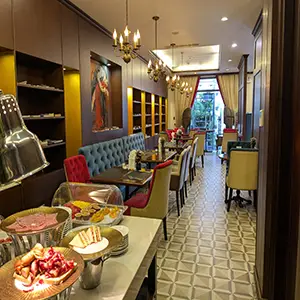
🏨 The Scarlett Boutique (see on Agoda / Booking): Great value hotel in a great location for exploring Hue; very helpful and nice staff
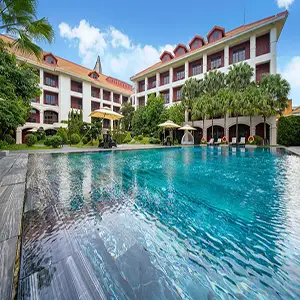
🏨 Senna Hue (see on Agoda / Booking): 5-star hotel in a great location, with a nice outdoor swimming pool
🎟️ Tours & Activities: this Imperial City walking tour or this private Hue tour (customizable)
Hue was the capital of Vietnam from 1802 until 1945, during which 13 different emperors from the Nguyen dynasty reigned. The final one, Emperor Bao Dai, abdicated in 1945, ending Vietnam’s last dynasty. There is a whole host of historic sites scattered around Hue. Together, they make up UNESCO’s Complex of Hue Monuments.
I recently spent a week exploring Hue to get the most up-to-date information for my new Hue travel guides. To get to Hue, I rode my scooter for 2.5 hours over the Hai Van Pass from Da Nang (a beautiful ride if you know how to ride a scooter). Here are things to do and where to stay in Hue.
Getting to (and around) Hue

You have a few options for getting to Hue. Most travelers fly into Da Nang Airport (DAD), then include Hue in their itinerary along with Da Nang and Hoi An. You can hire a Grab taxi to take you directly to Hue, or you can take the train from Da Nang, which will bring you right into Hue.
By taxi or train, it will take at least 2.5 hours of travel time from Da Nang. Longer if you’re going from Hoi An to Hue. You can book Da Nang train tickets here.
Hue also has its own smaller airport (Phu Bai International) with direct flights to Hanoi and Ho Chi Minh City. The airport is located here. If you’re also planning to visit Hanoi or HCMC, you can easily fly directly to Hue.
You could also visit Hue on a tour from Da Nang or Hoi An. These are good if you’re unable to spend a few days in Hue. Here’s a Hue tour from Da Nang that also takes the train. Here’s another full-day Hue tour.
Once you’re in Hue, the Grab app (download it here) is the king of getting around (and ordering food delivery!), much like everywhere else in Vietnam.
Reasons to Visit or Skip Hue
The table below provides an overview of what I consider to be general reasons to either visit Hue or skip it. If you’re visiting central Vietnam and doing Da Nang and Hoi An, and you have some extra days to play with, then I’d look into visiting Hue.
| Reasons to visit Hue | Reasons to skip Hue |
|---|---|
| The fascinating history | If you’re short on time |
| Hue Imperial City | If history bores you |
| Bún bò Huế (local specialty) | If you’re after nightlife |
| The royal tombs (seven in total) | It can be a long trip to get there |
| Additional UNESCO sites | If you aren’t very mobile |
| Not crowded or chaotic | |
| Not super touristy yet | |
| Still feels authentic | |
| Pretty clean for an active city | |
| The Perfume River paths are great |
The positive reasons to visit Hue above are self-explanatory. So I’ll explain a bit more about the reasons to skip Hue.
One of the biggest reasons is the time factor. If you’re someone who likes to soak in the experience, enjoy the history, take your time on vacation, etc., you will feel very rushed if you only have one day. I elaborate more below, but I recommend at least two full days.
Another big reason to skip Hue is if you or anyone in your travel party isn’t very mobile. Most of the UNESCO sites in Hue are not wheelchair accessible and have several areas of steps up and down. You will need to do a lot of walking if you want to see the Imperial City and the tombs (among other sites). When I visited the three most popular royal tombs (Tu Duc, Minh Mang, and Khai Dinh), I did over 10,000 steps.
But again, I’m doing research and exploring every area that’s accessible.
Why Hue is Worth Visiting
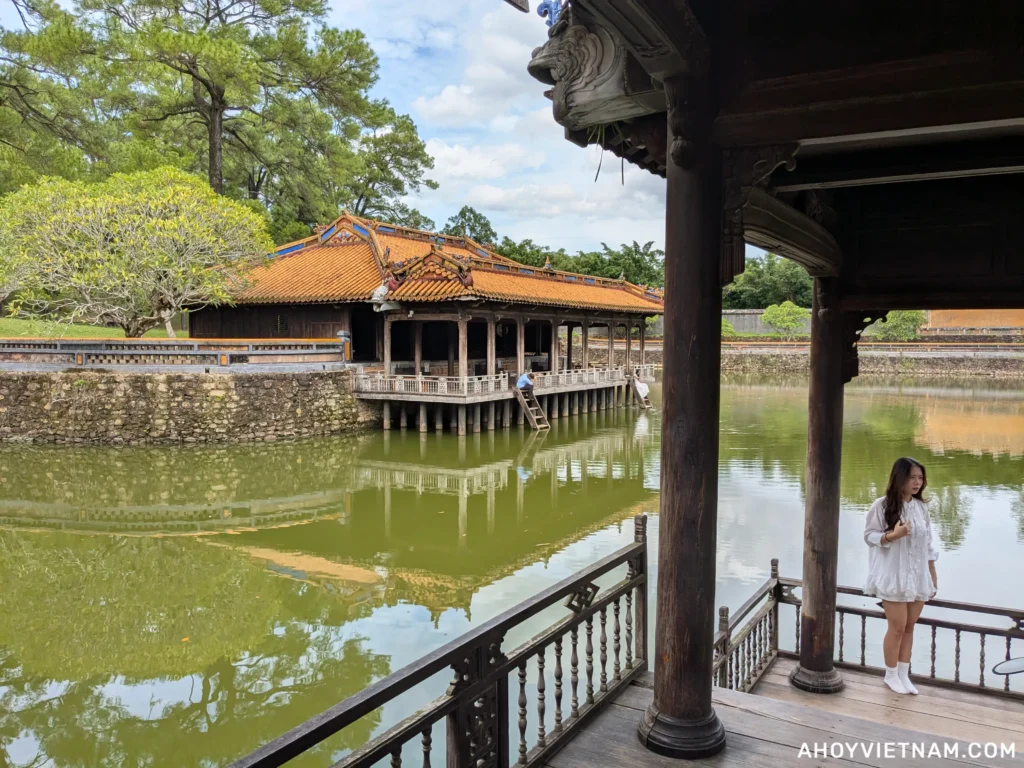
If you take a little time to read about the Nguyen dynasty of Vietnam, that alone might make you want to visit Hue. Plus, if you do decide to visit, knowing about some of Vietnam’s former emperors will help tie some of the attractions together (like the palace and the multitude of royal tombs).
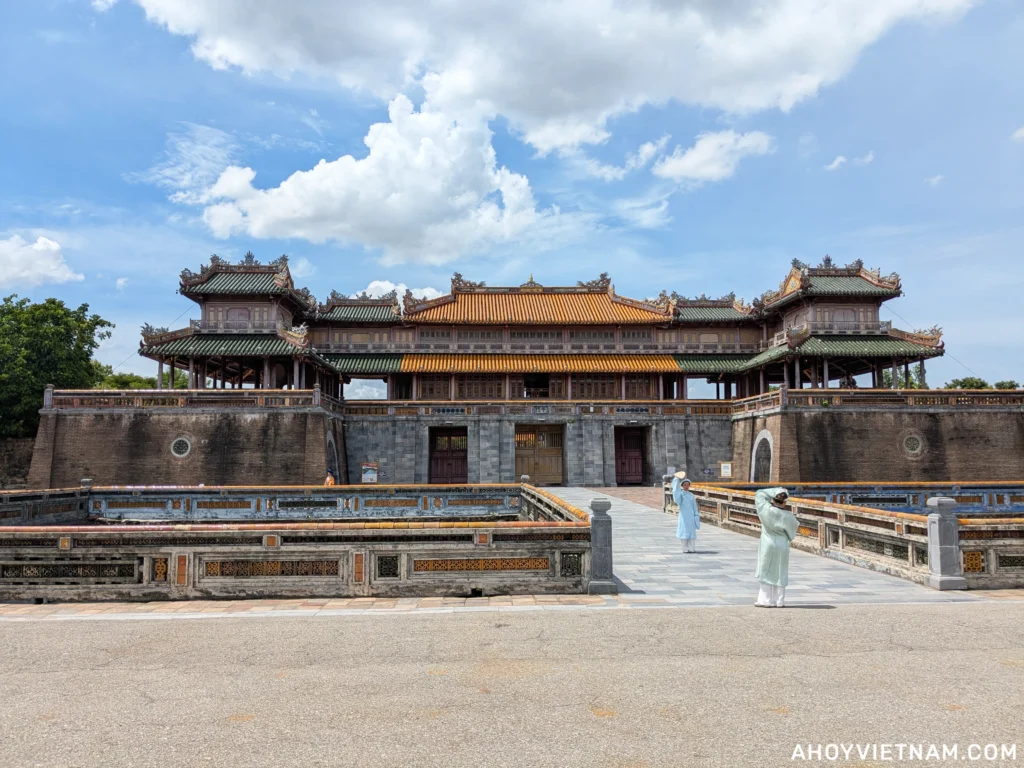
The history of Hue is probably the biggest and best reason to visit. The Imperial City is great (I wrote a full guide to visiting it here), and most of the royal tombs are very well-maintained. The three best tombs, Khai Dinh, Minh Mang, and Tu Duc, are the must-visit tombs. Of the three, my favorite is Tu Duc because of its circular layout in the woods. But all three of these were very cool in their own way.
Here’s a video I filmed at Khai Dinh’s tomb.
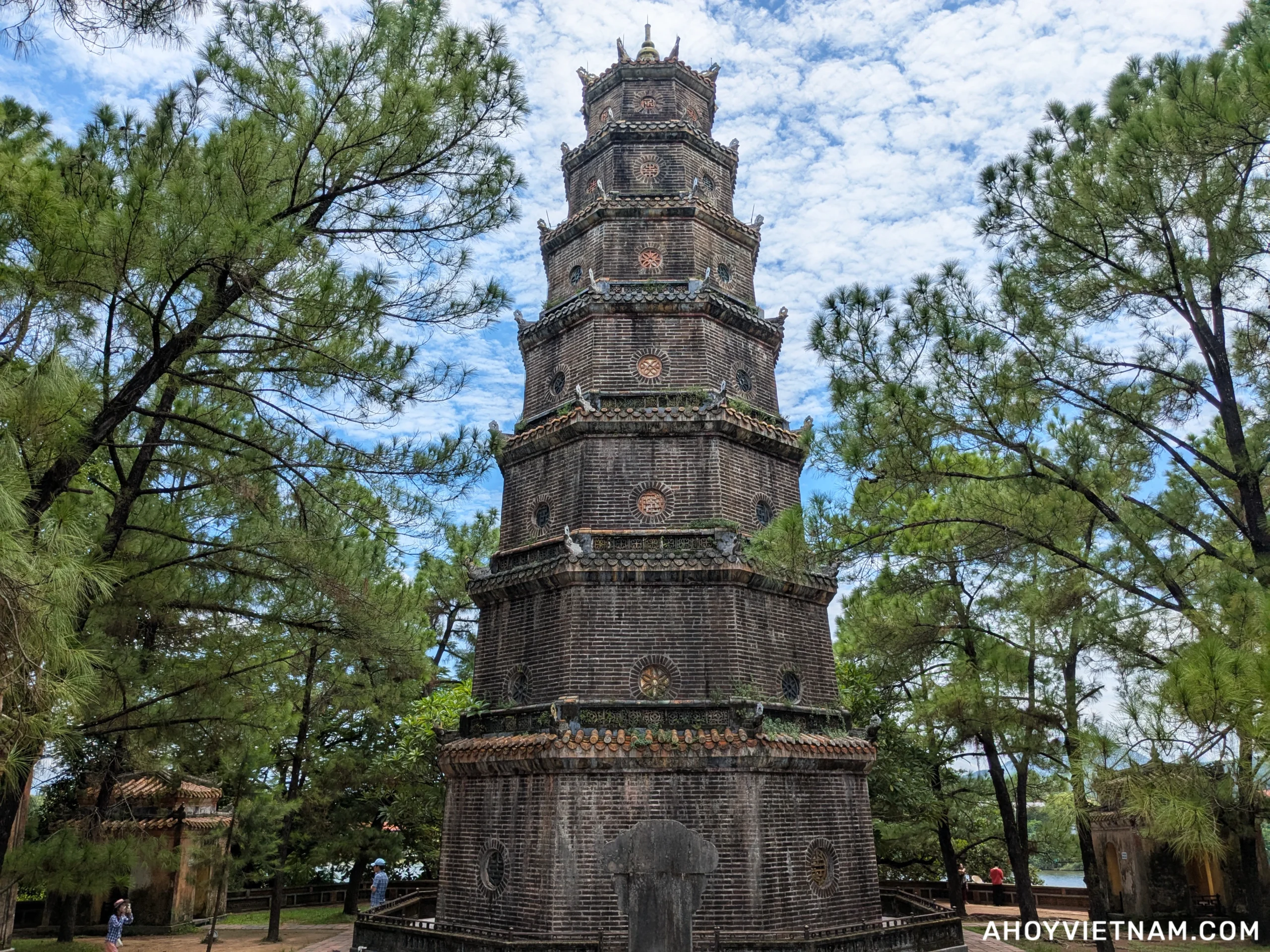
The Thien Mu Pagoda is another must-visit UNESCO attraction because it’s very easy to access and is free. It’s an active monastery, and again, the grounds here are very well-maintained. This is a quick and peaceful visit (I’d plan to spend about 30 minutes here).
Here’s another video I filmed at the Thien Mu Pagoda.
The thing about Hue is that, while it has several UNESCO sites and plenty of tourists visiting them, the overall city doesn’t feel very touristy at all. That might be hard to imagine, but that’s what I find when visiting Hue. Outside of the UNESCO sites, the city feels very authentic. And the city isn’t sleepy either; estimates put its urban population at well over 500,000 people.

Hue also doesn’t have a major expat scene yet. Most of the people coming to Hue only see a few of the UNESCO sites, then leave. I spent a lot of time riding around the city on my scooter, and I only saw one other expat in the city on a scooter. I did see some other travelers who rented scooters and rode out to the tombs on their own. If you can ride, renting a scooter will open more of Hue to you.
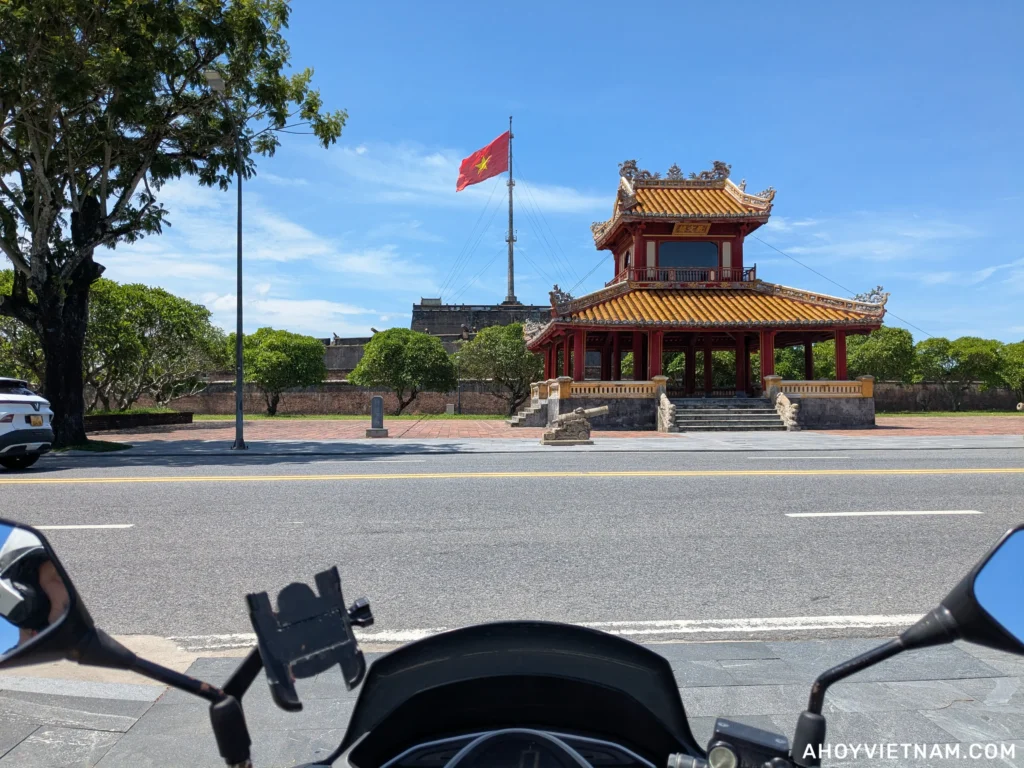
In the picture below, I’m parking in front of the Hue Flag Tower (Ky Dai). This flag tower is right at the entrance to the Imperial City. The flag tower is located here. You can see this flag tower from all over central Hue.
The central area of Hue does have “walking streets” that are similar in idea to Bui Vien in Ho Chi Minh City, but they’re very tame in comparison. Here’s one of the walking streets. The nightlife in Hue is harder to find and less in your face.
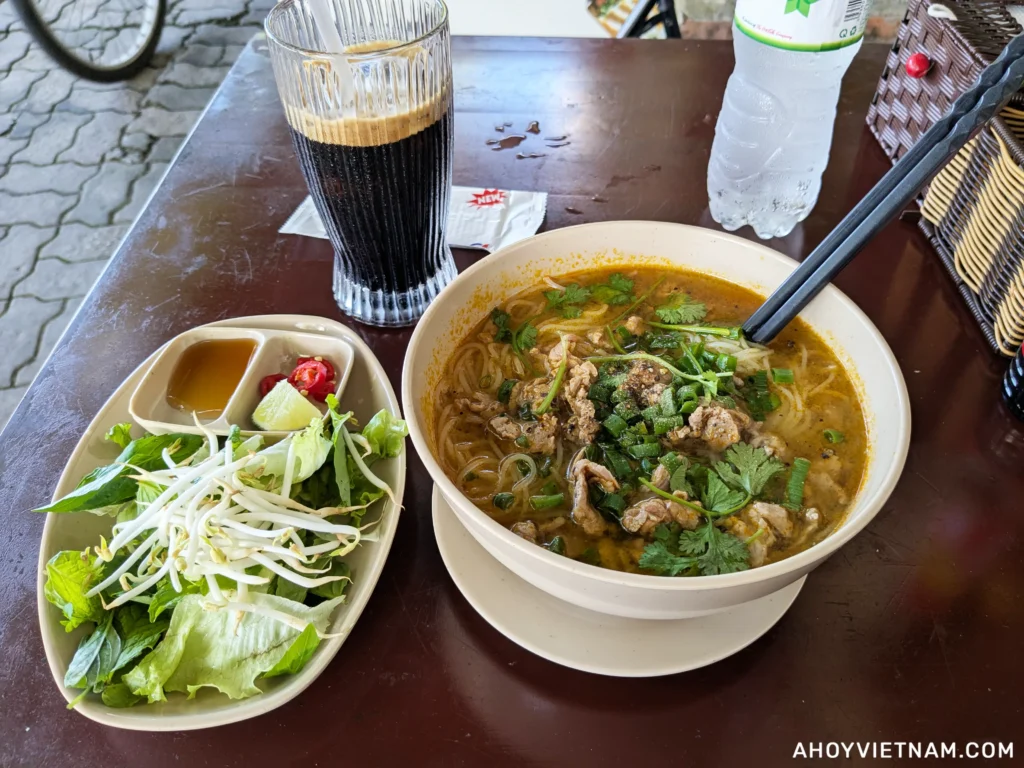
Bún bò Huế is one of my favorite dishes in Vietnam, and it originated in Hue. So there are a lot of different restaurants, with different family recipes, to sample this dish. I had some good bún bò Huế at N. Cafe here, just outside the Imperial City’s walls. You could stop here to eat before or after going inside the Imperial City.

While the Perfume River itself isn’t very exciting, the riverwalk paths and park along the river are great. They’re calm, pretty clean, and there’s a nice level of street and park activity without being at all chaotic. I walked around here several times, up and down the river, and there’s a relaxed authenticity of local life happening.
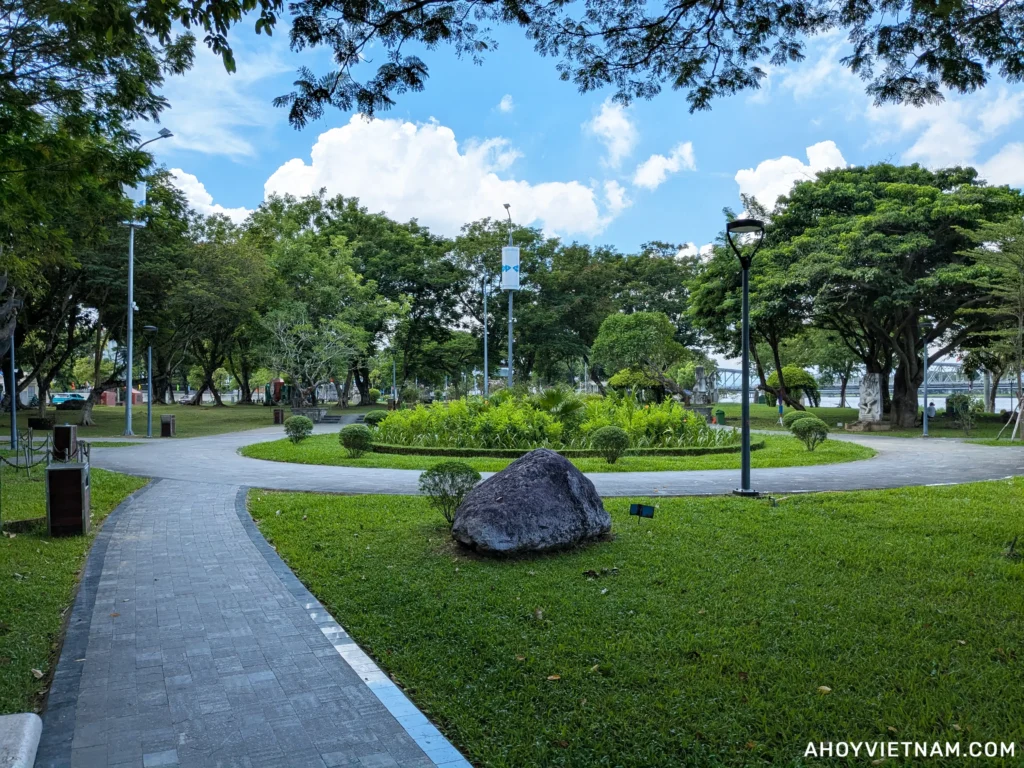
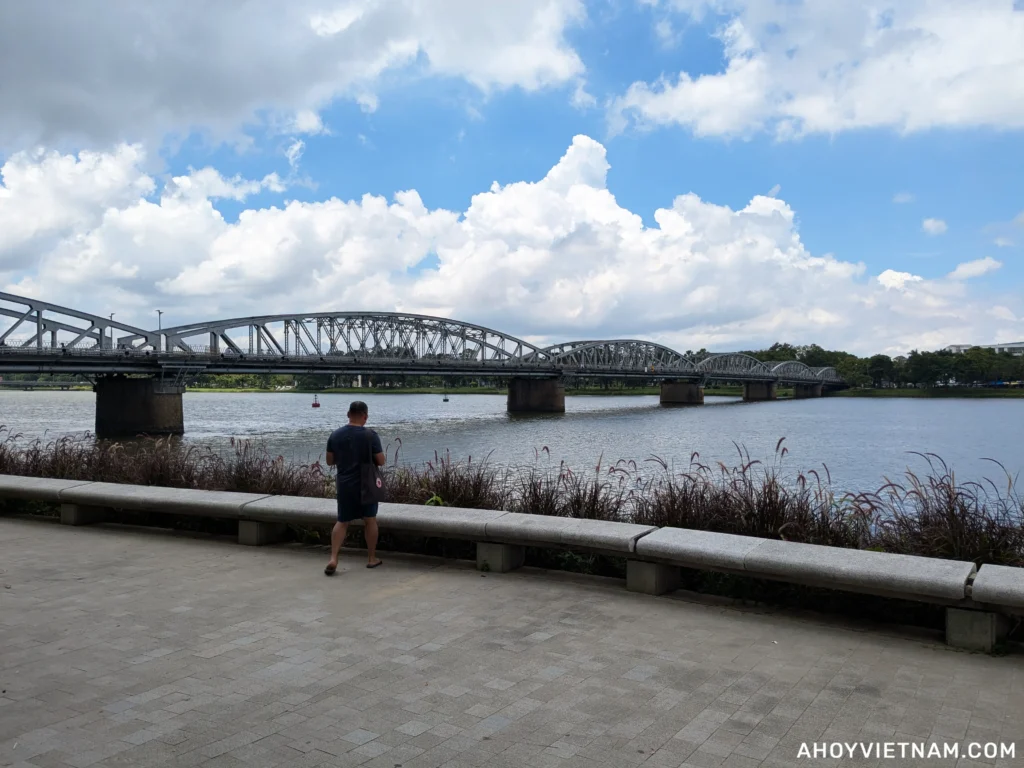
In this photo below, you can just see the Hue Flag Tower (Ky Dai) across the Perfume River.

This park and riverwalk area itself has another nighttime walking street, here. There are also places to check out inside the park, like the Lebadang Art Museum here. This is a smaller museum of his artwork. I visited his larger Lebadang Memory Space just outside Hue, too. If you’re into nature and calming places, this was very cool.
I’m in the process of planning another trip up to Hue from Da Nang, soon. And I’ll update when I do!
How Many Days to Spend in Hue

If you have full trip flexibility, I would allocate at least two full days to Hue. I was just there for six days and could’ve stayed longer, but I was doing a lot of research and visiting a lot of sites. For a well-planned traveler, three or four days would be the sweet spot.
There are several UNESCO sites in Hue, and most (the royal tombs) are outside the main city, between 15 and 40 minutes each by car. They are scattered around south of the city, and you’ll likely visit a few of them back-to-back. The Thien Mu Pagoda is just southwest along the Perfume River from the Imperial City, less than 10 minutes by taxi.
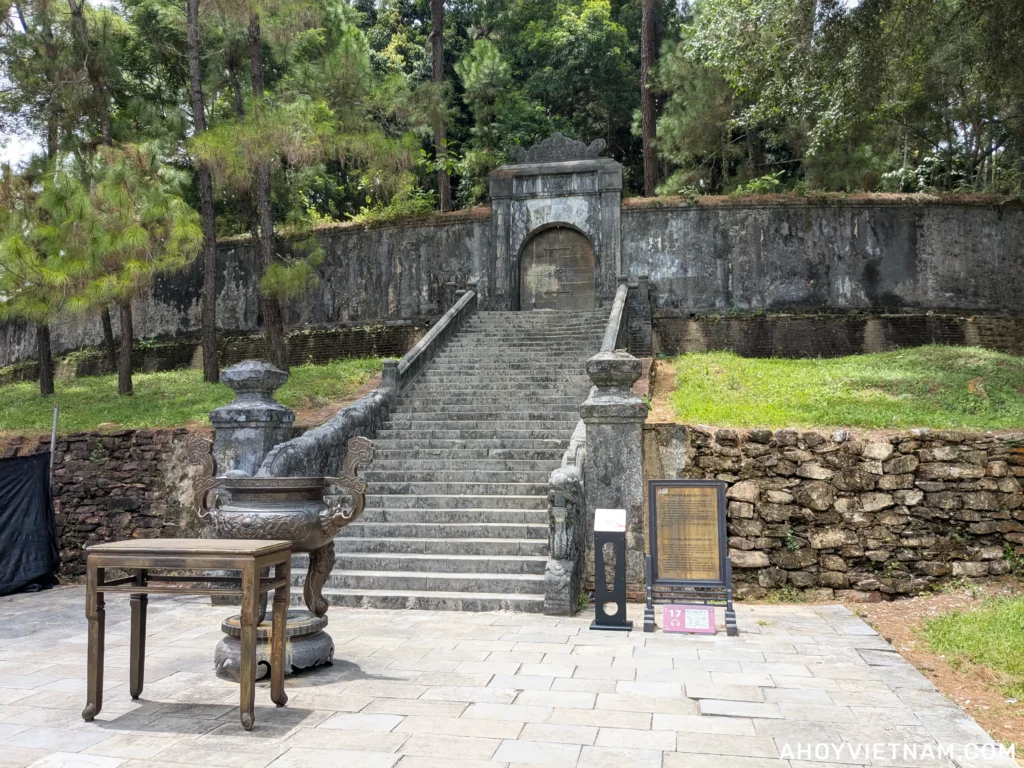
Hue Imperial City is near the main area of the city and very easy to get to. With only one day, you’d be very rushed and only see a few attractions. This is what the full-day tours that depart from Da Nang and Hoi An do. It’s one long day (with at least 5 hours eaten up from driving), and you’ll see three or four attractions total, including the Imperial City, before returning to Da Nang or Hoi An.
If you don’t have full trip flexibility, and you really only have one full day, then joining one of the full-day tours from Da Nang or Hoi An would be the most efficient way to at least visit Hue and see the Imperial City.
My advice: Personally, I would allocate at least two full days in Hue, then take a taxi or car transfer service there, and then join a Hue tour if you want because there is a lot to see, and a lot of history, and the tours will help with getting between attractions — this is a good customizable Hue tour, and this one covers the Imperial City.
If You Decide to Visit Hue, Here’s Where You Should Stay
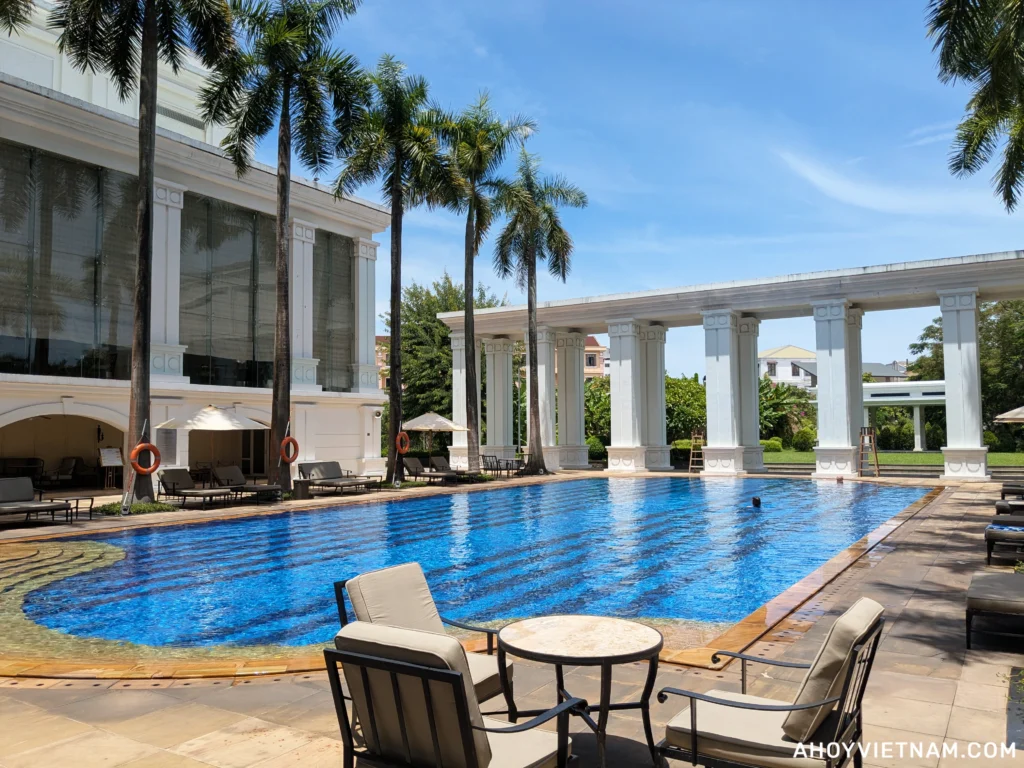
The best UNESCO sites in Hue are all spread out. There isn’t one area or hotel you can stay at that will put you within walking distance to several attractions — it doesn’t exist. So what you want to do is pick a hotel in a central area of the city, so that when you’re not visiting attractions, it’ll be easy to get food, drinks, and you’ll have access to convenience stores.
I stayed at The Scarlett Boutique (see on Agoda / Booking) for a few days. This is in a great location for wandering on foot to get something to eat. Within 5 to 10 minutes, I was able to check out a new restaurant each night. I had great sushi at Gem Sushi Bar here. It’s 4 minutes from the hotel.
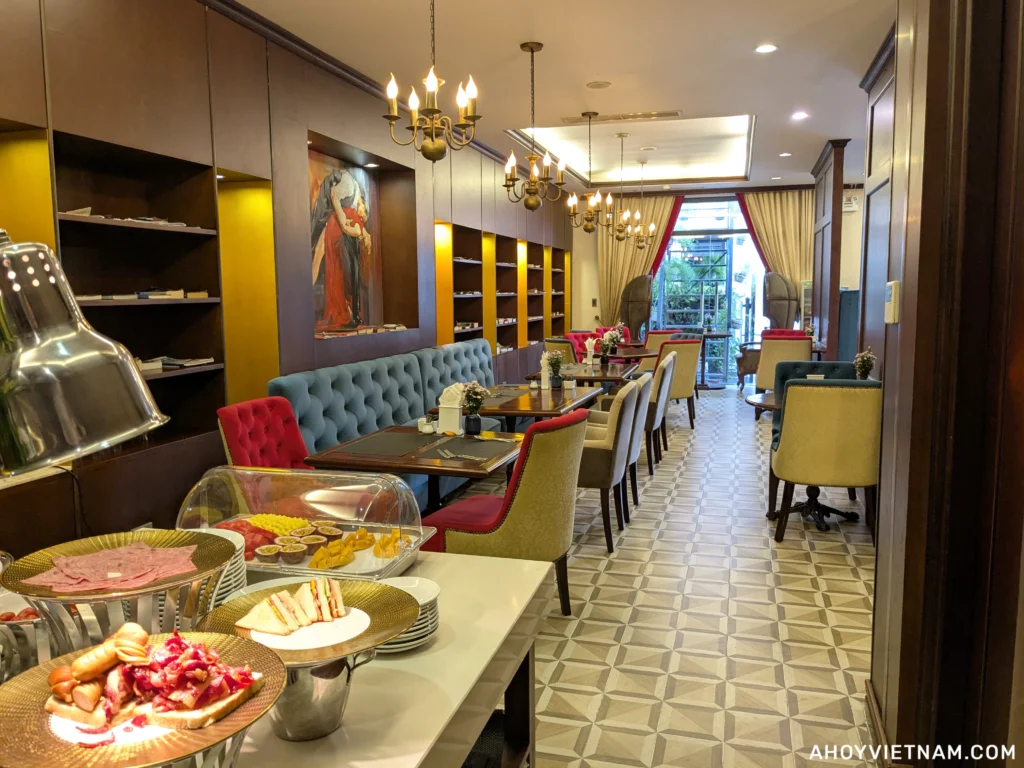
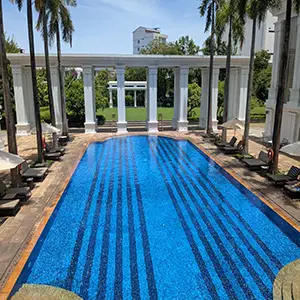
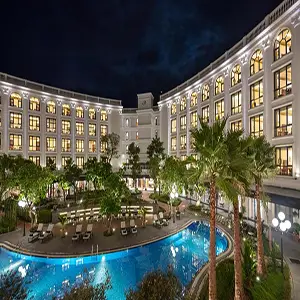
I also stayed at the Indochine Palace (see on Agoda / Booking), and this has one of the best outdoor pools I’ve seen at any hotel in Vietnam. But the downside is that the actual location isn’t as convenient on foot as the Scarlett Boutique — not to say it’s bad, just not as great. If you’re a pool person, this hotel will make up for that.
For something on the nicer side, look at the Melia Vinpearl Hue (see on Agoda / Booking). This hotel is the tallest building in Hue and is attached to the Vincom mall, making it a pretty convenient place to stay, too.
With all of these hotels, it’s important to remember that you’ll be taking Grab taxis (unless you’re on a tour) to get to the attractions. So pick a place that you think looks nice, comfortable, and has good reviews. If you’re using Agoda, you can filter the hotels by “location score.” Pick a place that’s 9+.